Last updated November 21, 2026
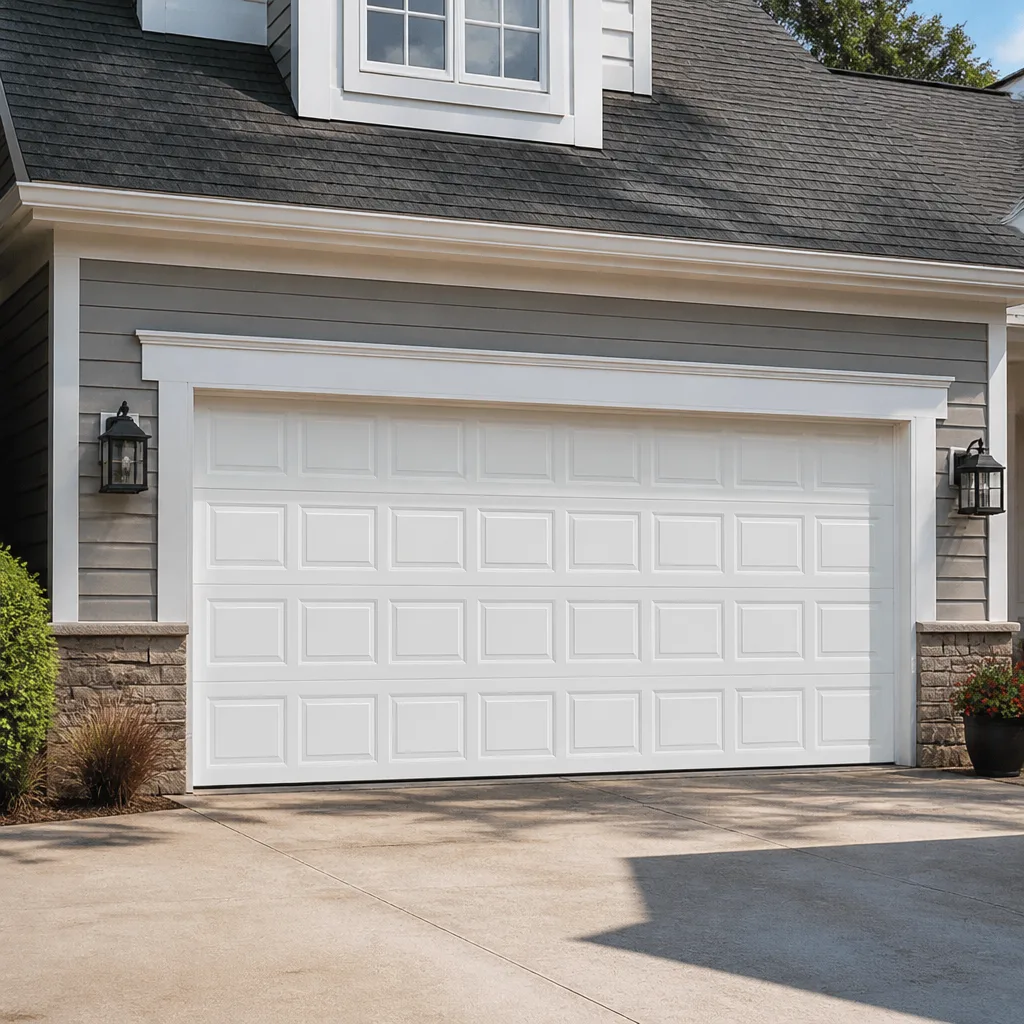 Raised-panel steel
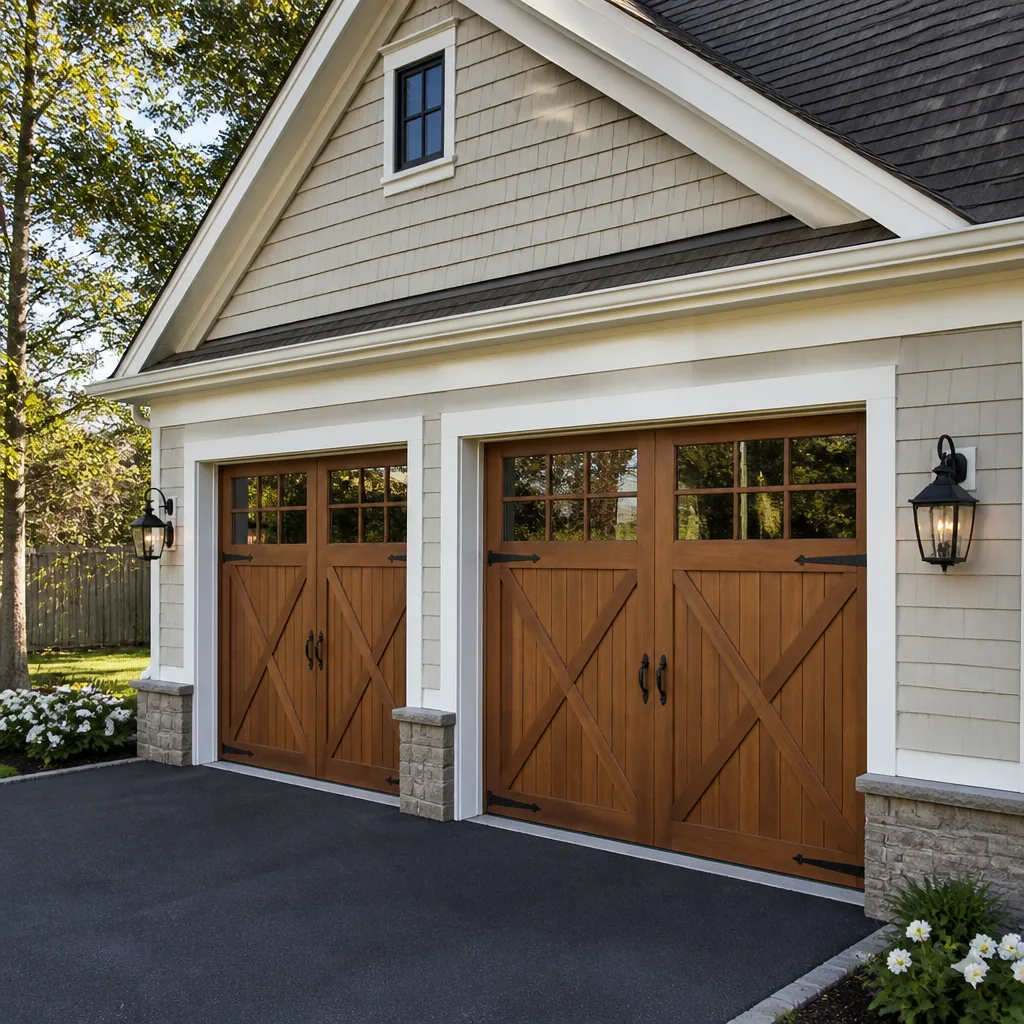 Carriage house
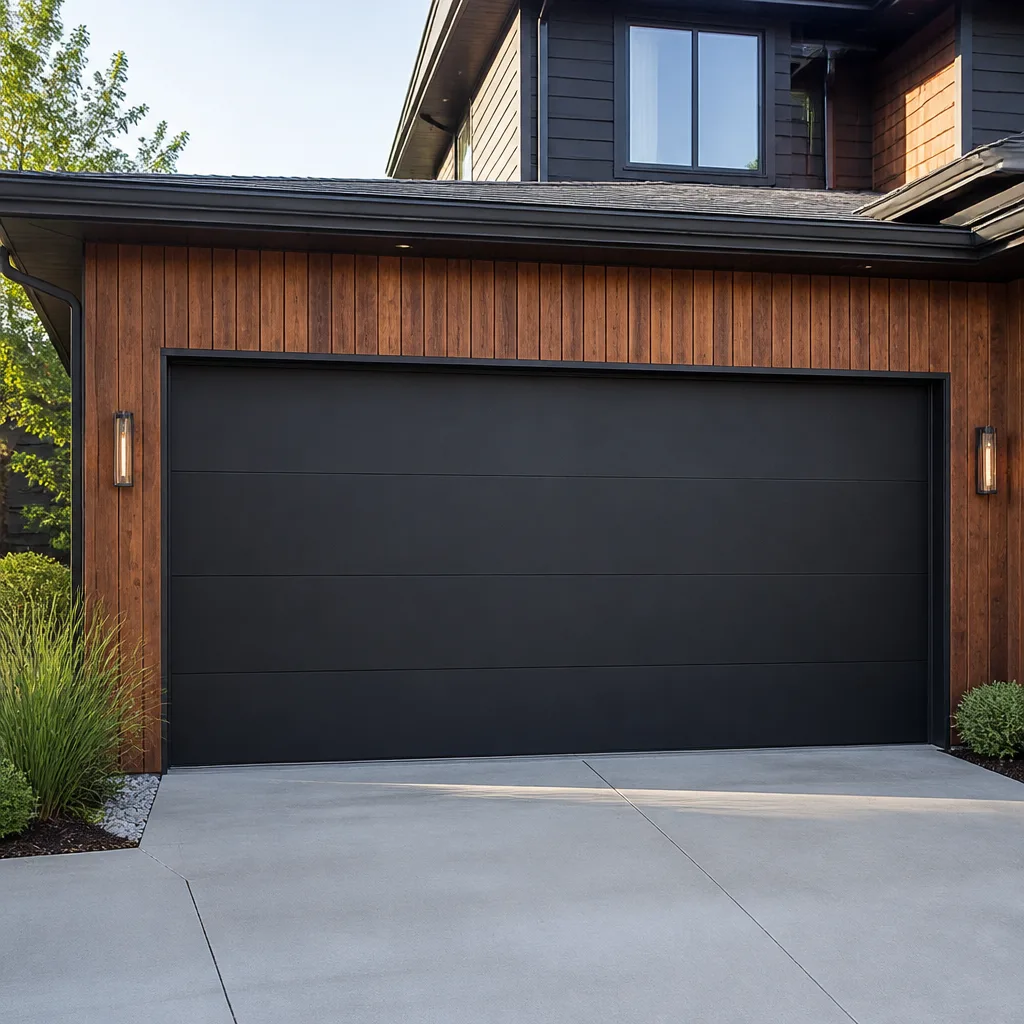 Modern flush
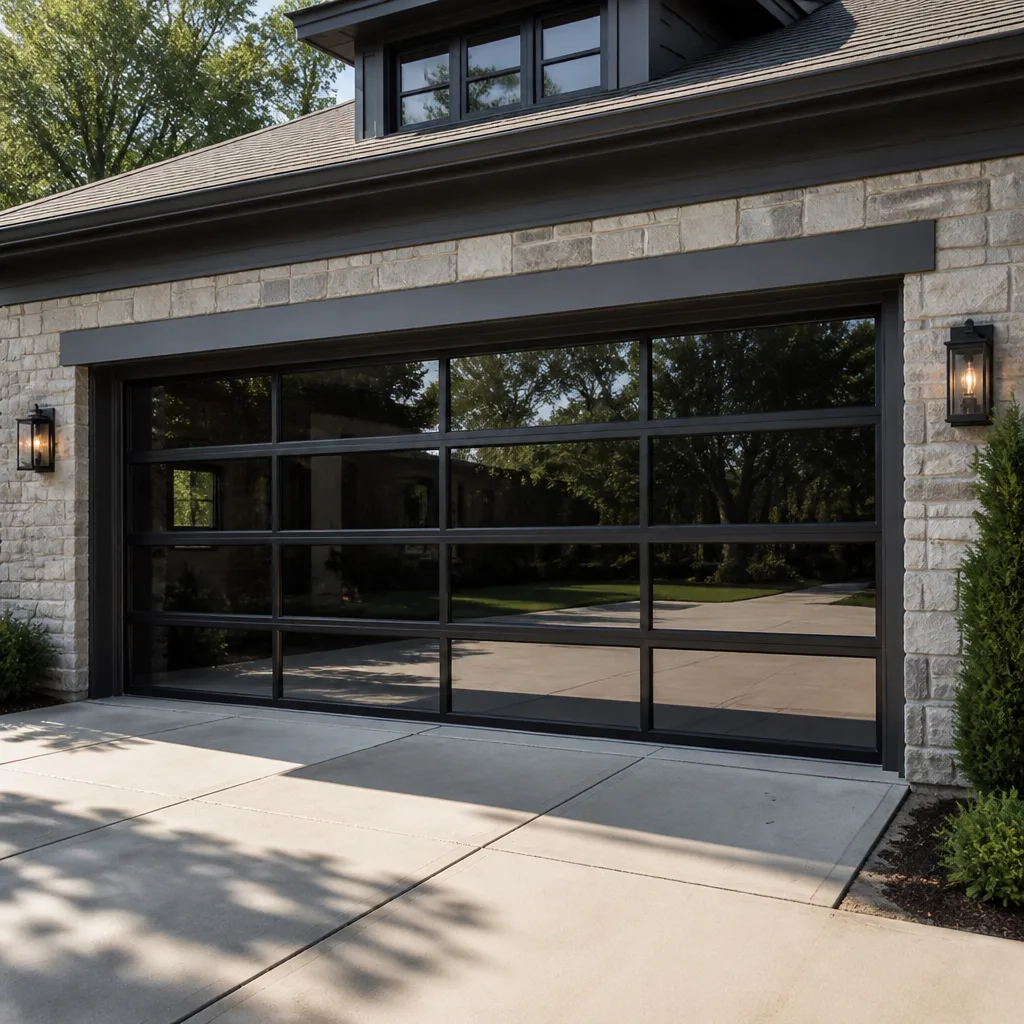 Full-view glass
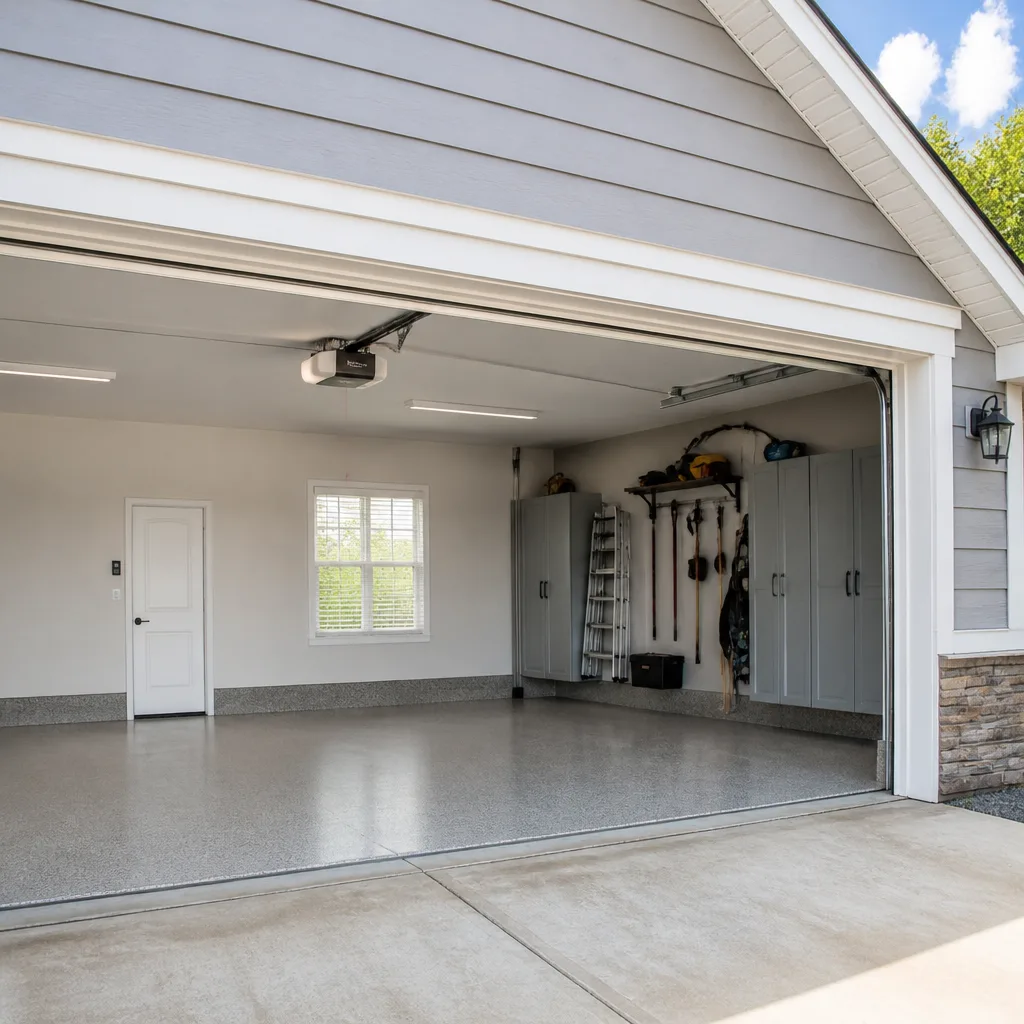 LiftMaster openers
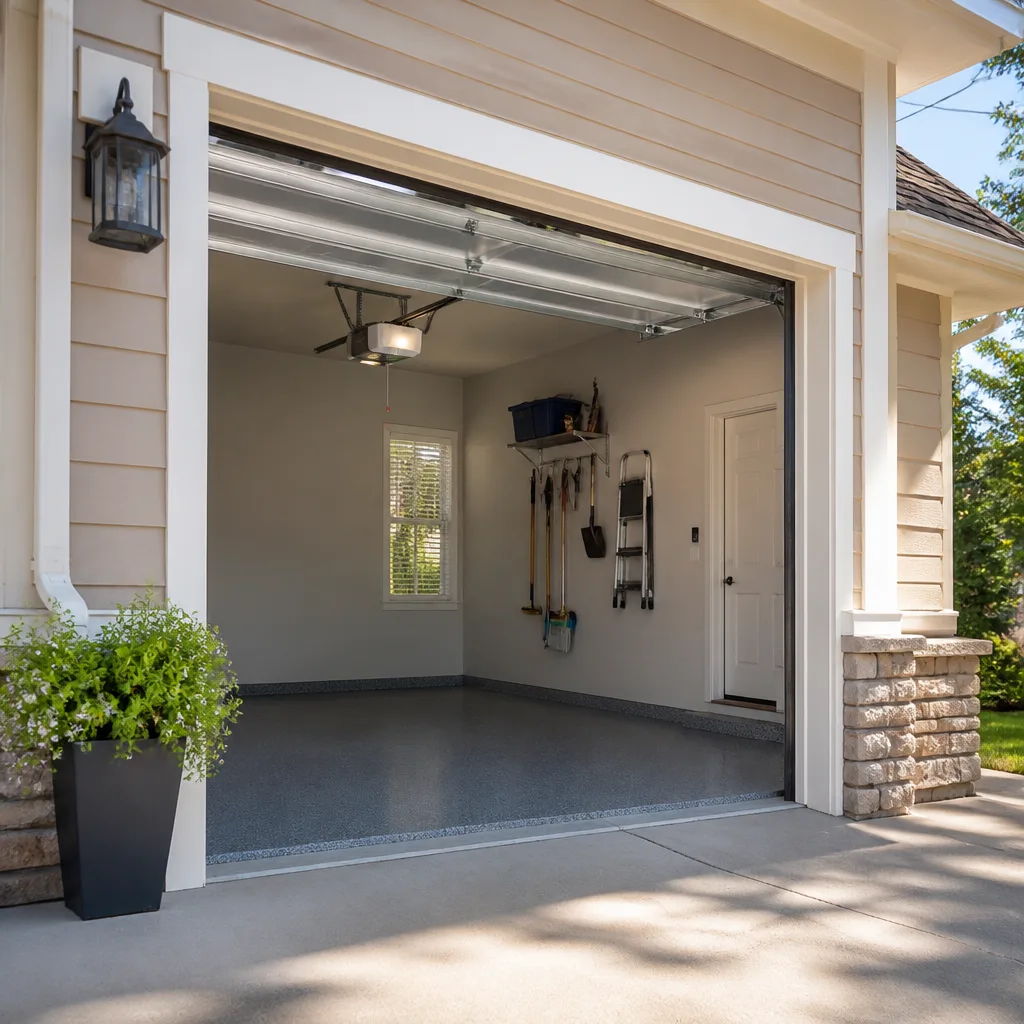 Chamberlain openers
Full 25-point door and opener safety check with every visit - springs, cables, rollers, tracks, and your LiftMaster or Chamberlain opener included
You get a price before we start. It does not change when the pro arrives.
Get your free estimateGarage Door Emergency Preparedness Guide for Ellicott City Homes
Most garage door emergencies aren’t caused by the door. They’re caused by a homeowner who never learned the manual release. During the 2018 Ellicott City flood, some residents found their cars trapped behind a dead opener, with no idea that a simple pull cord would have freed the door in seconds. That moment of panic is preventable, and it has nothing to do with water. Storms knock out power across Ellicott City, springs snap without warning, and snow and ice add weight the door was never meant to lift. This guide walks you through what actually fails in an Ellicott City home, what to do in the first 60 seconds, and the five-minute pre-storm check that keeps a nuisance from becoming an emergency.
Quick Answer
Garage door emergency preparedness for Ellicott City homeowners means three things: knowing how to operate your door manually when the power fails, knowing what to do (and not do) the moment a spring snaps, and running a short pre-storm check before a major weather event. The single most important skill is the manual release. Learn it now, in daylight, before you need it in the dark.
Styles & brands we work with
- Raised-panel steel
- Carriage house
- Modern flush
- Full-view glass
- LiftMaster openers
- Chamberlain openers
Table of Contents
- How does the manual release work, and why do people get it wrong?
- What should you do when the power goes out?
- What do you do when a spring snaps mid-cycle?
- How do you prepare a garage door for flood conditions in Ellicott City?
- What is the five-minute pre-storm checklist?
- Battery backup versus manual operation: which fits your home?
- How do ice and snow change the rules in Ellicott City?
- What should you check after the storm passes?
How does the manual release work, and why do people get it wrong?
The manual release disconnects your door from the opener so you can lift it by hand. On nearly every residential opener, it’s a red cord or handle hanging from the trolley carriage that rides along the rail above the door. Pulling it disengages the carriage from the drive belt or chain. That’s the whole idea. The problems start with what people do next.
LiftMaster, Chamberlain, Genie, and Craftsman openers all use variations on this same design, and the release works the same way on each: pull once, firmly, and the door is free. Pull it while the door is mid-travel and the carriage can land in a bad position. Pull it repeatedly and you can jam the trolley. And here’s the misconception that traps people: many homeowners think disengaging the door opens it. It doesn’t. It only frees the door from the motor. The door itself stays where it is until you lift it.
When you’re ready to reconnect, do it with the door fully closed and the trolley pushed back toward the opener by hand, then pull the release a second time until it clicks back into the carriage. If you try to re-engage with the door open, the carriage won’t catch and the opener will run without moving the door.
- Locate the red release cord above the door while the opener is still powered.
- Pull down and toward the door once, firmly, until you feel the carriage release.
- Lift the door by its bottom section with both hands, using your legs, not your back.
- Prop the door only when it’s meant to be propped. Never leave a disengaged door half-open overnight.
- To reconnect, close the door, line up the carriage, and pull the release again until it clicks.
If the release cord is frayed, missing, or stuck, that’s a repair, not a workaround. Our technicians work on the brand you already have, and a snapped release assembly is one of the faster fixes in the trade. When the door won’t move and you can’t free it, that’s the moment to call for a garage door repair visit rather than force anything by hand.
What should you do when the power goes out?
When the power cuts, your first move should be to leave the door alone for a moment and find a light. Storms in Howard County knock out power often enough that outages are a routine part of living here, and an unlit garage is where people make bad decisions. Once you can see, you have two choices: wait for the power to return, or operate the door manually using the release described above.
If you have a battery backup opener, the door may still work. LiftMaster and Chamberlain models with battery backup are the most common around here, and they switch to battery automatically when AC power drops. Check the wall control for a battery indicator. A backup that hasn’t been tested in a year often won’t carry the door, so test it seasonally.
Manually operated doors have one rule that matters: never force a door that won’t lift easily. A properly balanced door lifts with one hand. A door that feels heavy or won’t stay open is a sign that a spring is weak or broken, and fighting it risks injury.
- Wait a minute after the outage, then check the opener’s battery indicator if you have one.
- If the door won’t respond on battery, use the manual release rather than the remote.
- Keep a small flashlight mounted near the garage door so it’s always within reach.
- Don’t leave a car idling in a closed garage while you sort things out. Carbon monoxide builds fast.
- If the opener hums but doesn’t move the door, disconnect it and call for garage door opener repair.
What do you do when a spring snaps mid-cycle?
A spring snaps with a sound like a gunshot, and the door drops or stays put, depending on where it was in the cycle. In that moment, your only job is to secure the door safely and wait for a technician. Do not try to open it. The spring is what counterbalances the door’s weight. When it fails, the door becomes a several-hundred-pound slab held only by the opener, and lifting it by hand can bring it down on you.
This is the area where we see the most dangerous DIY attempts. Torsion springs, the type on most modern doors, are under tension that can cause serious injury when handled by anyone without the right tools and training. We treat spring repair as a standalone service because it’s one of the highest-risk calls in this trade. A trained technician winds and unwinds springs with the right bars and the door braced. There’s no safe shortcut.
- Step away from the door and clear the area. Keep children and pets out of the garage.
- Leave the door exactly where it is. Don’t lift it, don’t push it, don’t try to close it by force.
- Unplug the opener if the door is stuck mid-travel so it doesn’t cycle against a jammed door.
- Look at the spring above the door. If you see a visible gap in the coil, it’s broken.
- Call for garage door spring repair and tell the dispatcher the door’s position and the spring type if you can see it.
A matched pair of springs is almost always replaced together. If one breaks, the other is at the same point in its fatigue life, and replacing just the failed spring usually means a second call within weeks. Ellicott City’s temperature swings from humid summers to hard freezes speed that fatigue along, so a paired replacement is the practical choice.
How do you prepare a garage door for flood conditions in Ellicott City?
Ellicott City sits in a valley where streams and storm runoff converge, and the town has a well-documented history of flash flooding. For a homeowner with an attached garage, that means water reaching the door threshold is a real scenario, not a remote one. Preparing for it starts with understanding what your bottom seal can and can’t do.
Most garage door bottom seals are designed to keep out drafts, dirt, and windblown rain. They are not waterproof barriers. A standard vinyl bulb seal conforms to the floor enough to stop a modest sheet of water, but standing water will push past it. Seals with a single fin are drainage-friendly but provide little resistance. Seals with a thicker bulb or a dual-tube profile offer meaningful water resistance at the threshold, though none of them are rated for submersion. If your floor is uneven, the seal may ride above the low spots, and water will find those gaps first.
Protect the opener electronics too. The opener head is mounted near the ceiling, which keeps it above most floodwater, but the wall control and the photo-eye wiring run low. If water reaches those, unplug the opener before you touch anything.
- Seal condition: check the bottom seal for compression, gaps, and torn fins. Replace a worn seal before storm season.
- Floor slope: note where water pools in your garage and whether the door threshold sits high or low.
- Photo-eyes: mount or route the wiring clear of the floor line so a shallow flood doesn’t short it out.
- Opener: know where the outlet is and how to unplug the unit quickly.
- Contents: keep anything you can’t replace on shelves, not on the floor.
A Clopay or Amarr door with a solid threshold seal gives you more margin than a thin single-fin seal, but the door itself can’t be your flood wall. The real work is knowing the water’s path, clearing debris from gutters and drains, and never storing a vehicle where rising water can trap it. If your community is under a flash flood warning, move cars out of the garage well before water reaches the door.
What is the five-minute pre-storm checklist?
Before any major weather event, five minutes with your garage door can save you a full emergency visit. The idea is to spot a problem while it’s still fixable, not to fix anything yourself. Walk through the following check while you can see and the power is still on.
- Test the manual release. Pull it once while the door is closed, lift the door by hand, and confirm it moves smoothly. Pull it again to reconnect. If it fights you, get it looked at.
- Listen to the opener. Run it up and down. A grinding, squealing, or straining sound is a warning sign.
- Check the springs. Look for visible gaps, rust, or sagging coils above the door.
- Inspect the bottom seal. Run a hand along it and look for gaps where water could push through.
- Look at the path. Clear anything stored in front of the door and test the photo-eye beams by waving something through them.
Do this before every named storm and once at the start of the storm season. Ellicott City has had more than one flash flood event in the last decade, and each one has left residents wishing they’d checked their doors and cleared their basements beforehand. The check takes five minutes, and it catches the majority of the failures we see. If the door won’t run, or the opener is behaving strangely, call for Ellicott City Garage Door Repair Pros and we’ll get a technician out to look.
Battery backup versus manual operation: which fits your home?
A few neighborhoods in Ellicott City see outages more often than others, and if you’re in one, a battery backup opener is worth the difference in cost. A standard opener depends entirely on house power and drops the moment the utility does. A battery backup unit keeps the door working for a limited number of cycles after the outage begins, which matters if you have one vehicle, need to get out for work, or keep medications in the fridge.
Though we don’t quote prices here, the general shape of the decision is simple. Battery backup adds to the cost of a new opener but removes a lot of the anxiety around losing power. If you rarely lose power for more than minutes, manual release is enough. If your stretch of Ellicott City goes dark with every storm, backup earns its place. The newer LiftMaster and Chamberlain models with battery backup are the most common request we get, and they’re a straightforward upgrade when you’re already replacing or repairing an opener.
Ellicott City neighborhoods to think about, based on where we hear the most service calls from: homes off Frederick Road, properties near Main Street in the historic district, and the older streets around Oella and Ilchester always seem to be among the first to lose power when storms roll through the Patapsco valley. If you’re in one of these areas, a backup opener or at least a well-practiced manual release should be part of your plan.
The key point is this: battery backup buys you time, manual release gets you out. You should have both, and you should know how to use both. A battery that’s never been tested is a false sense of security. Once every season, cycle the door on battery power to confirm it still works.
How do ice and snow change the rules in Ellicott City?
Snow and ice change how a garage door behaves. The bottom seal can freeze to the floor, the tracks can collect ice, and the door can lift unevenly because one side is stuck while the other rises. If you force a frozen door, you can bend a track or shear the carriage.
Before you open the door after a snow or ice event, look for a frozen seal. Clear the snow and ice from the door opening and the threshold with a shovel or a broom, and don’t need to use a metal scraper on the seal itself. Give the door a gentle lift by hand before you press the remote. If it doesn’t rise easily, wait, or call for help.
Ellicott City gets enough freeze-thaw cycles through December and January that a door which lifted smoothly a week earlier can suddenly stick. A Wayne Dalton door with a vinyl seal is especially prone to freezing to the slab. Keeping the seal dry and clearing the apron in front of the door prevents most of it. When winter catches you off guard and the door won’t move, our garage door repair team can usually trace the problem quickly.
What should you check after the storm passes?
After a storm, walk the garage door’s path before you cycle it. Check for debris under the door, water in the tracks, and any obvious damage to the panels. Run the opener once and listen. If the door runs smoothly, you’re likely fine. If it struggles, stops partway, or the opener keeps clicking without moving the door, don’t keep pressing the remote. That’s how small problems turn into worn gears.
Check the springs and the cables, too. Look for gaps in the coils and frayed or loose cables on the sides. Cables are under tension just like springs and should never be touched by a homeowner. If anything looks off, keep the door closed and wait for a technician. This is also a good moment to test the manual release while everything is calm, so you’re ready for the next outage.
If the storm brought water into your garage, dry the opener and wall control with a cloth and let everything air out before you plug the opener back in. Never operate wet electronics. If you’re unsure whether the opener took on water, call before you test it.
Common Mistakes to Avoid
- Pulling the manual release by force. If it doesn’t move easily, it’s jammed. Yanking it can snap the carriage or bend the release arm, and then you have two problems instead of one.
- Trying to open a door after a spring snaps. The spring is what makes the door liftable. Without it, the door can drop without warning. Leave it closed and call.
- Assuming a standard bottom seal stops floodwater. It stops wind and splash, not standing water. In Ellicott City’s flood-prone areas, a thin seal gives you almost nothing.
- Skipping the battery backup test. An untested battery is often a dead battery. Cycle the door manually on battery once each season.
- Ignoring the door after a storm. Small damage from debris or water often doesn’t show up until the door fails on a busy morning.
- Forcing a frozen door in winter. Ice in the tracks can bend a track or wear out the opener. Clear the ice before you run the door.
- Leaving cars in the garage during a flash flood warning. Move them out early. Once water reaches the threshold, the door won’t help you.
See the difference
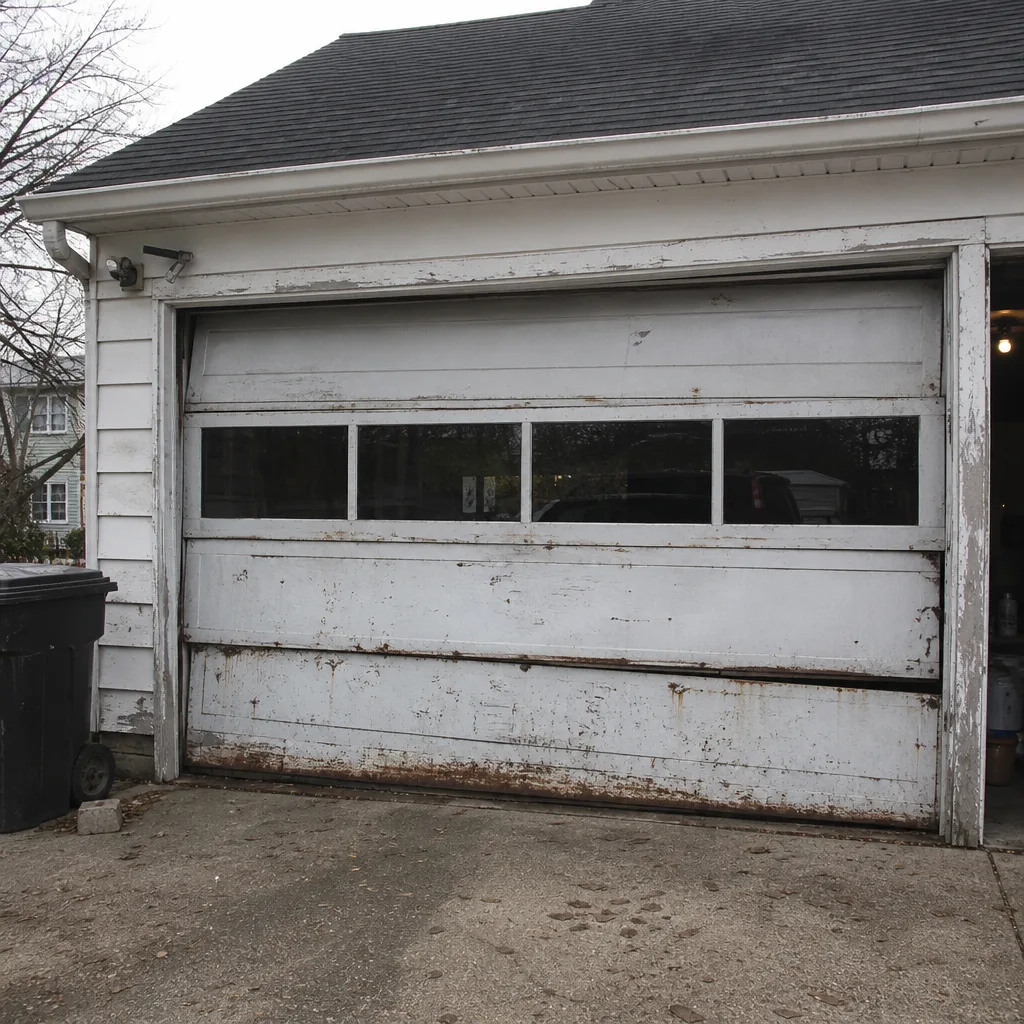 Before
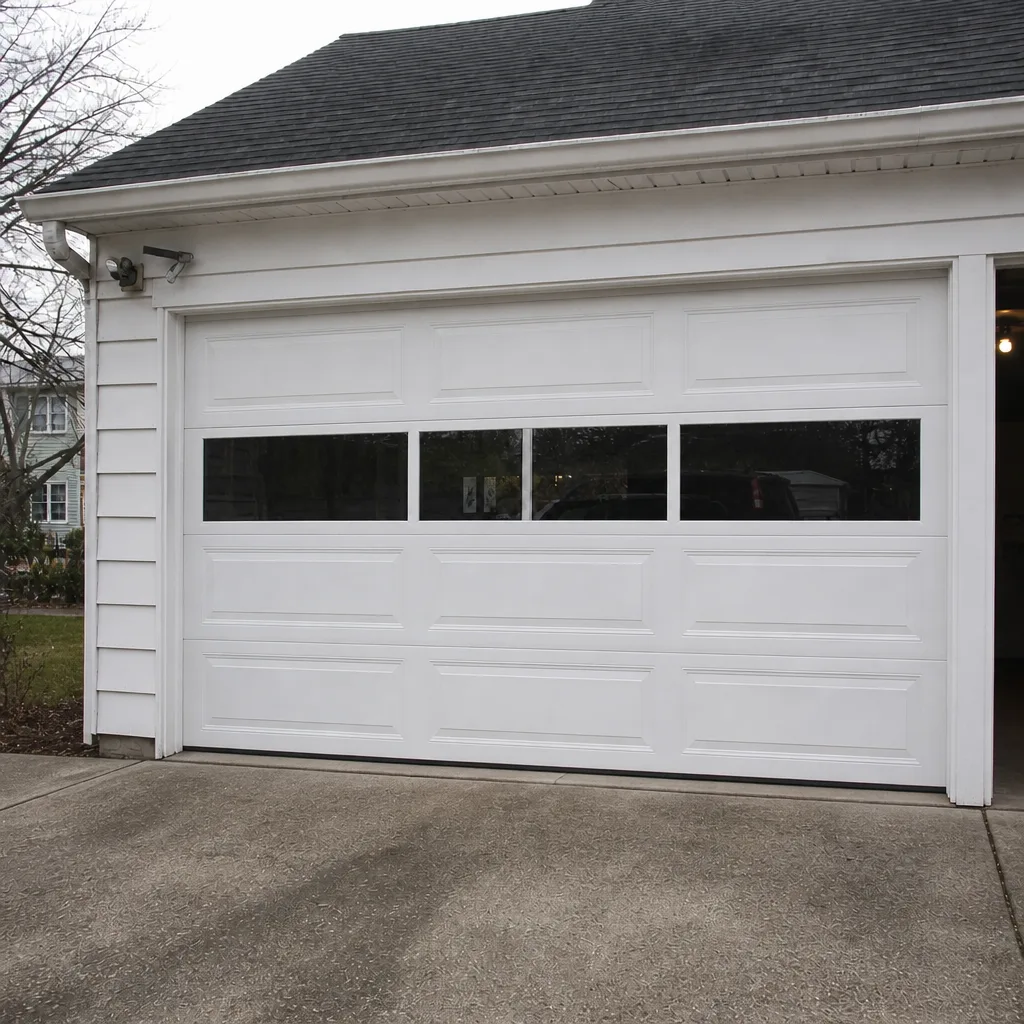 After
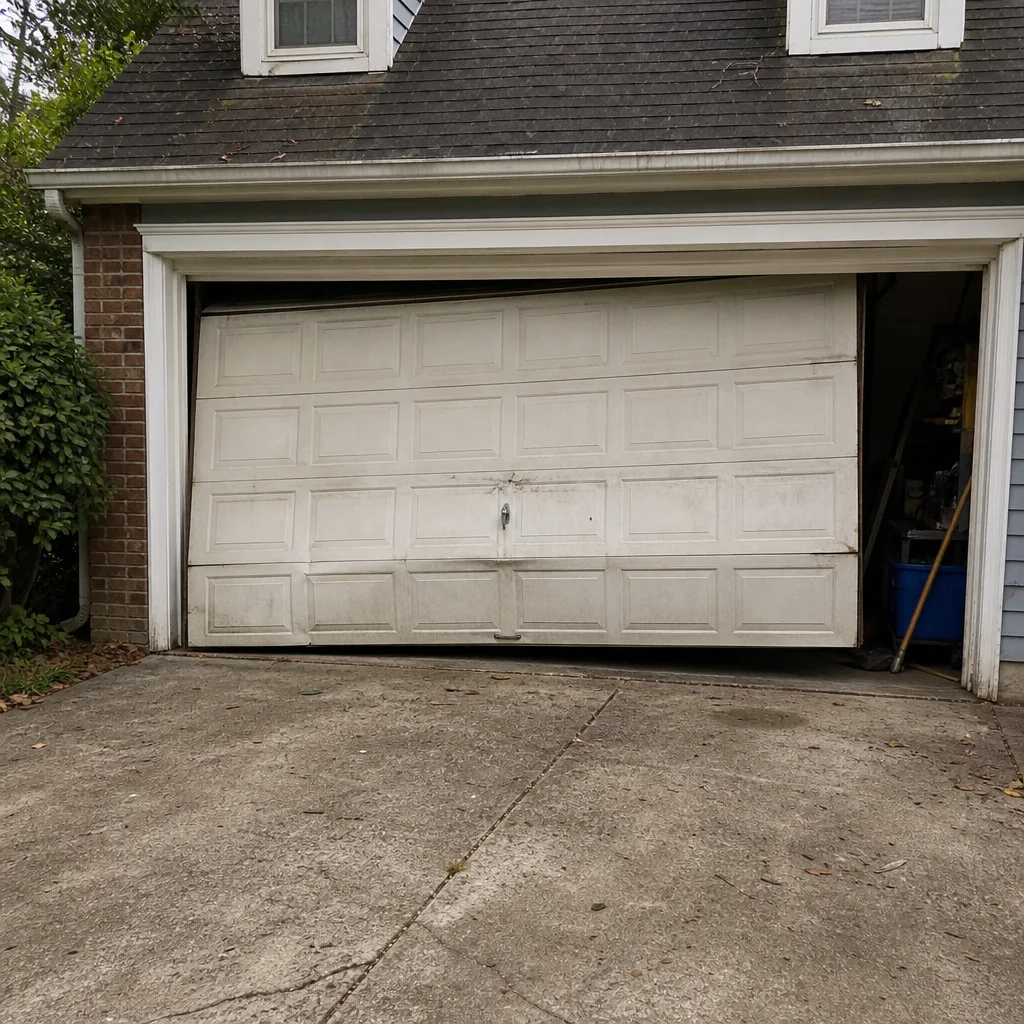 Before
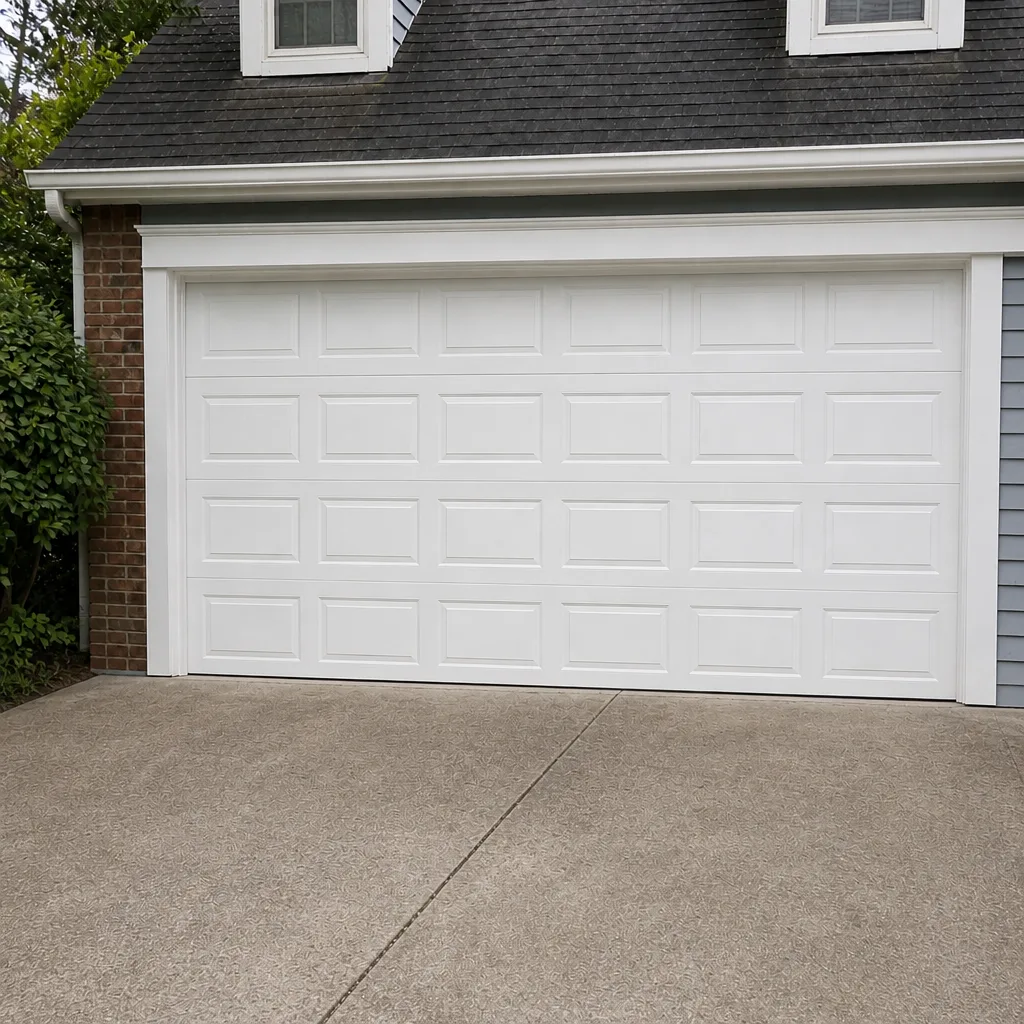 After
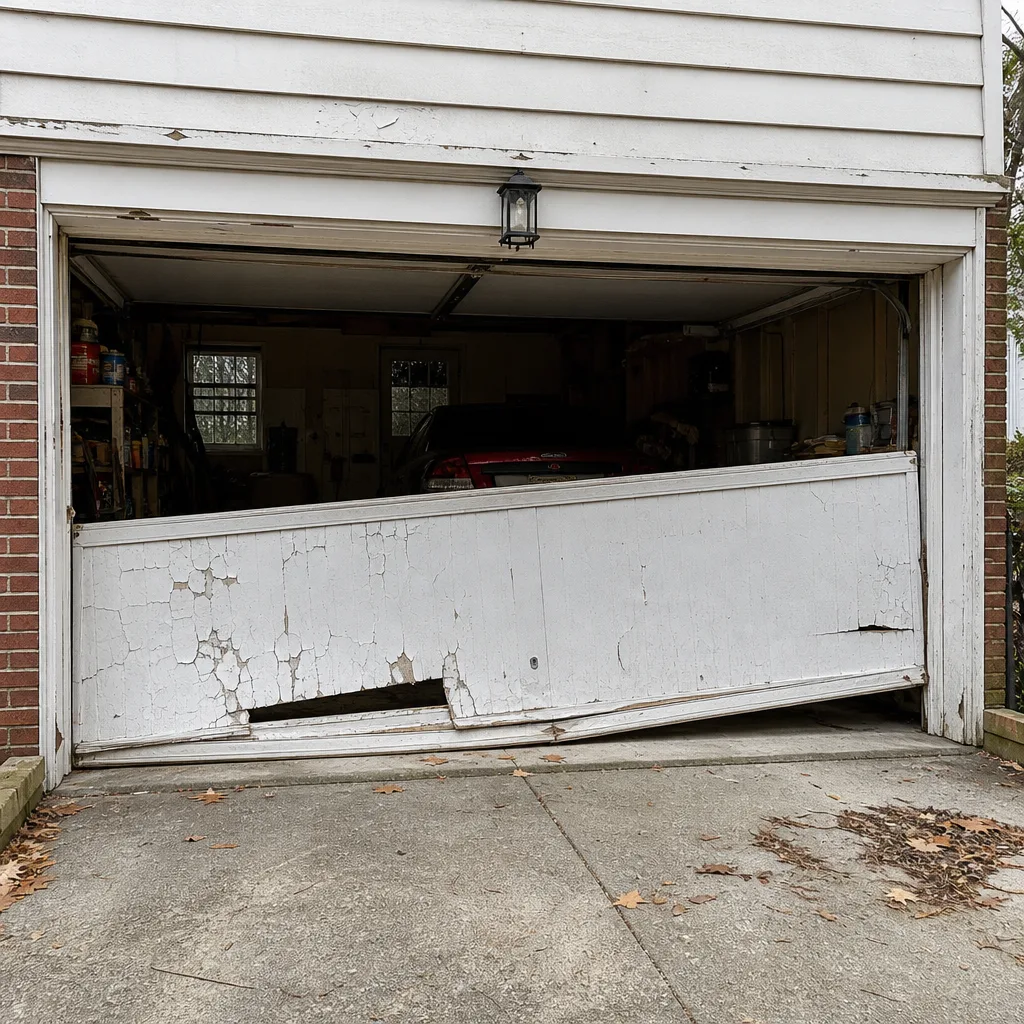 Before
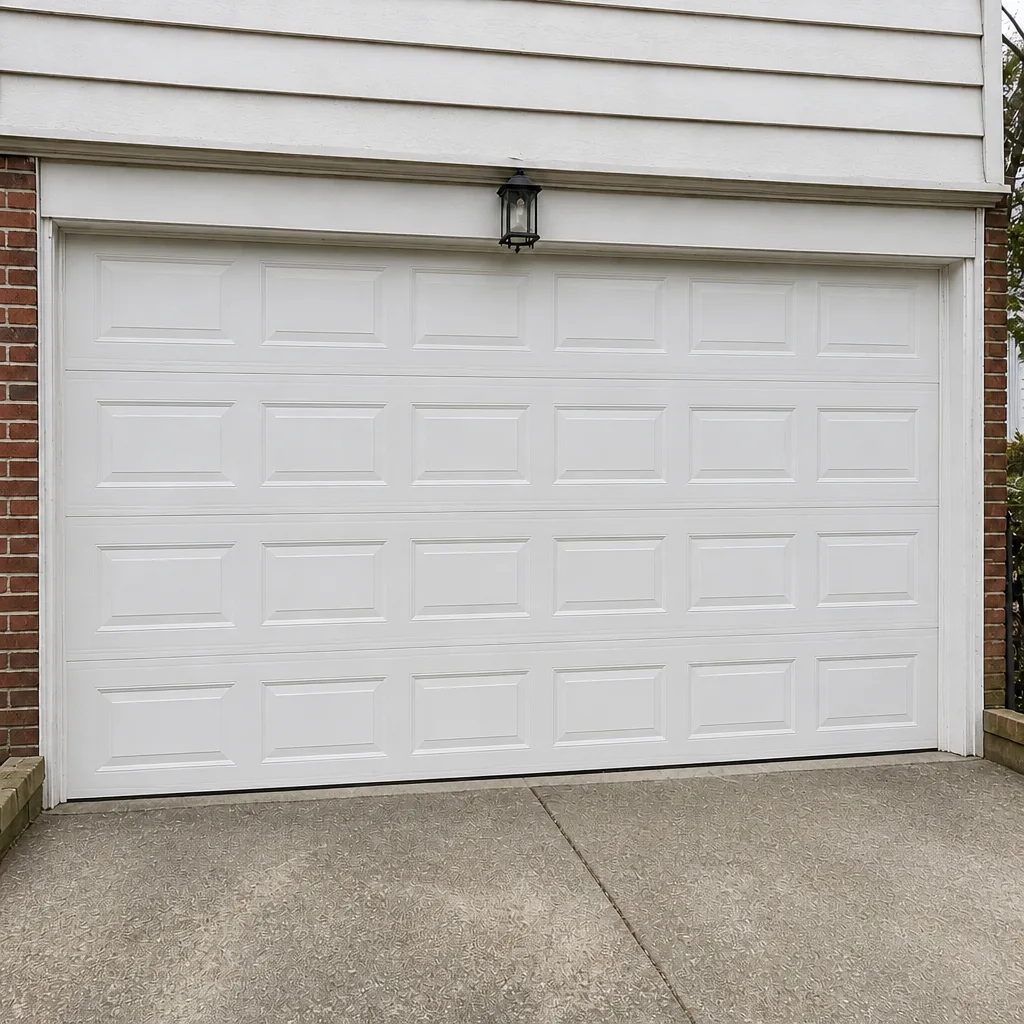 After
When to Call a Professional
Call a professional when the door won’t lift smoothly, when a spring or cable looks damaged, when the opener hums but doesn’t move the door, or when anything about the door’s motion feels unsafe. If you’ve tried the manual release and can’t get the door to move, don’t keep trying. Ellicott City Garage Door Repair Pros offers free estimates in Ellicott City. Our technicians are experienced across the major brands, from LiftMaster openers to Clopay and Amarr doors, and we can walk you through what’s happening before you commit to anything. Call (855) 840-2105 and we’ll help you sort out the next step.
Frequently Asked Questions
Pull the red manual release cord hanging from the trolley above the door, then lift the door by hand. The door should rise easily if the springs are healthy. If it feels heavy, stop and call for help.
Don’t touch the door. Leave it in place, keep people and pets away, unplug the opener if the door is stuck mid-travel, and call for repair. Torsion springs are under dangerous tension, and a trained technician is the only safe way to replace them.
Homes off Frederick Road, properties near Main Street in the historic district, and the older streets around Oella and Ilchester tend to lose power early in storms. If you’re in one of these areas, a battery backup opener or a well-practiced manual release is worth having.
Most bottom seals stop drafts and splash, not standing water. A thicker bulb or dual-tube seal gives you more resistance at the threshold, but no residential bottom seal is rated for submersion. Clearing drains and moving cars early matters more than the seal.
If your home loses power often, yes. A battery backup keeps the door working for a limited number of cycles after the outage starts, which buys you time to get a car out. If power outages are rare and brief in your area, manual release is sufficient.
Call when the door won’t move, the opener runs without moving the door, a spring or cable looks damaged, or the door sticks in winter. We offer free estimates and can be reached at (855) 840-2105.
The Bottom Line
Garage door emergencies in Ellicott City aren’t random. They follow the same patterns: a spring that’s been under tension for years, a battery that was never tested, a seal that gave out under floodwater, a door frozen to the floor on a January morning. The manual release is the single skill every homeowner here should know cold. Learn it now, test it seasonally, and run the five-minute pre-storm check before every major weather event. When something doesn’t feel right, don’t force it. Call a technician, get a written price before any work starts, and keep the door on a regular check schedule. That’s the whole preparedness plan, and it works.
Written by the team at Ellicott City Garage Door Repair Pros.