Last updated November 21, 2026
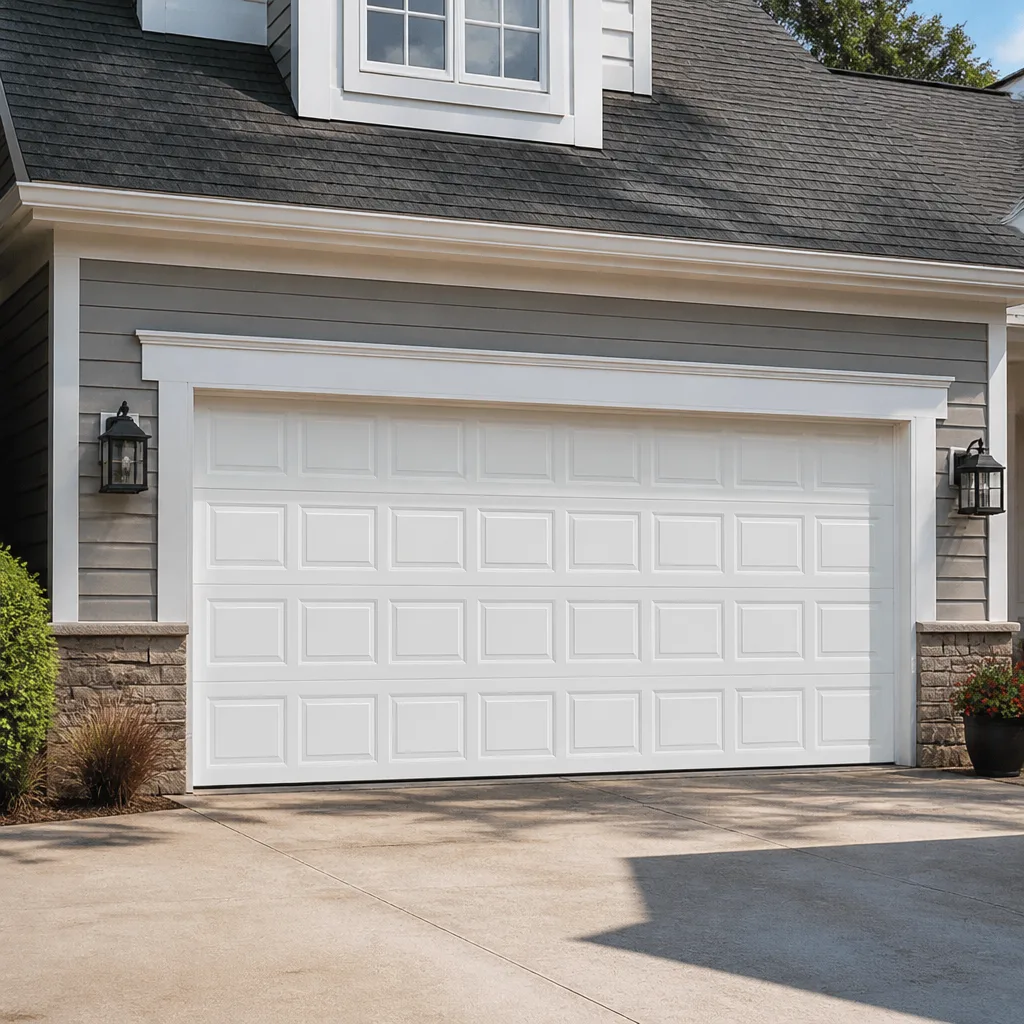 Raised-panel steel
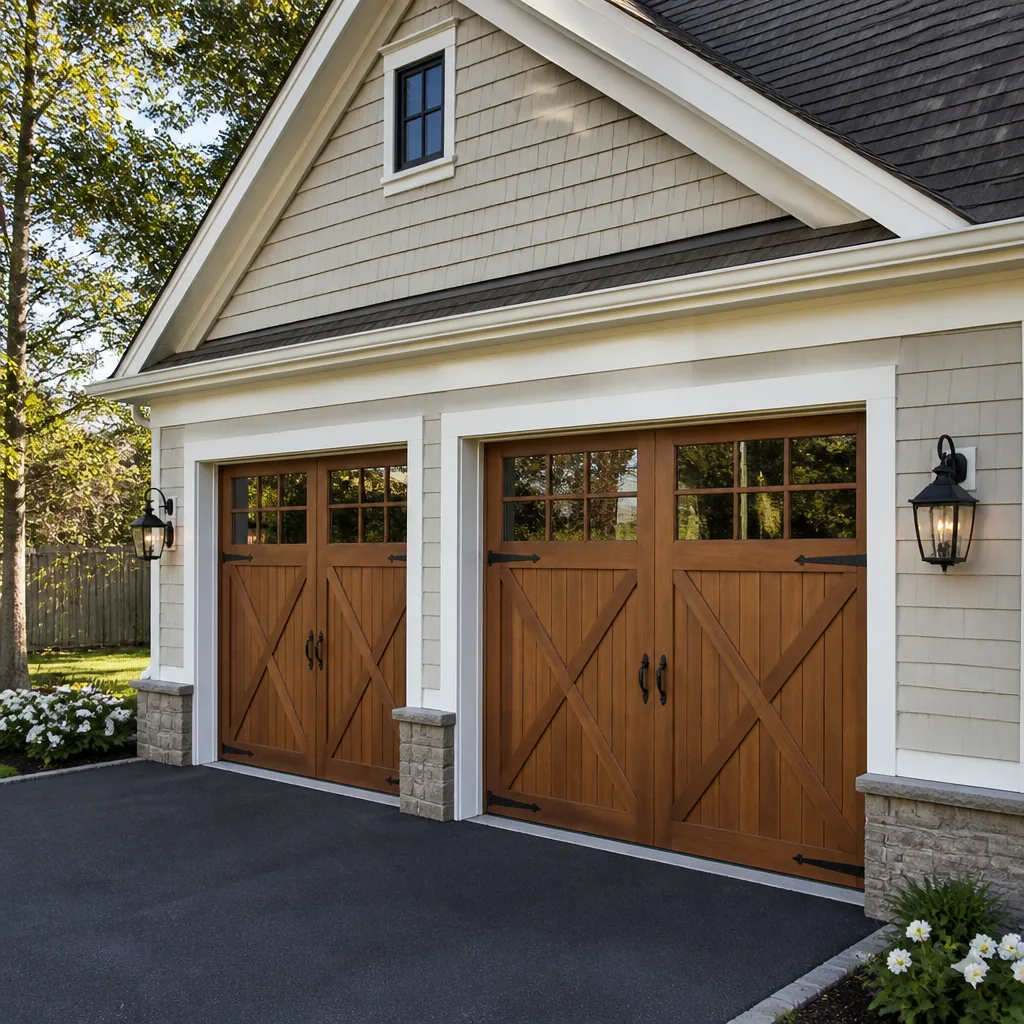 Carriage house
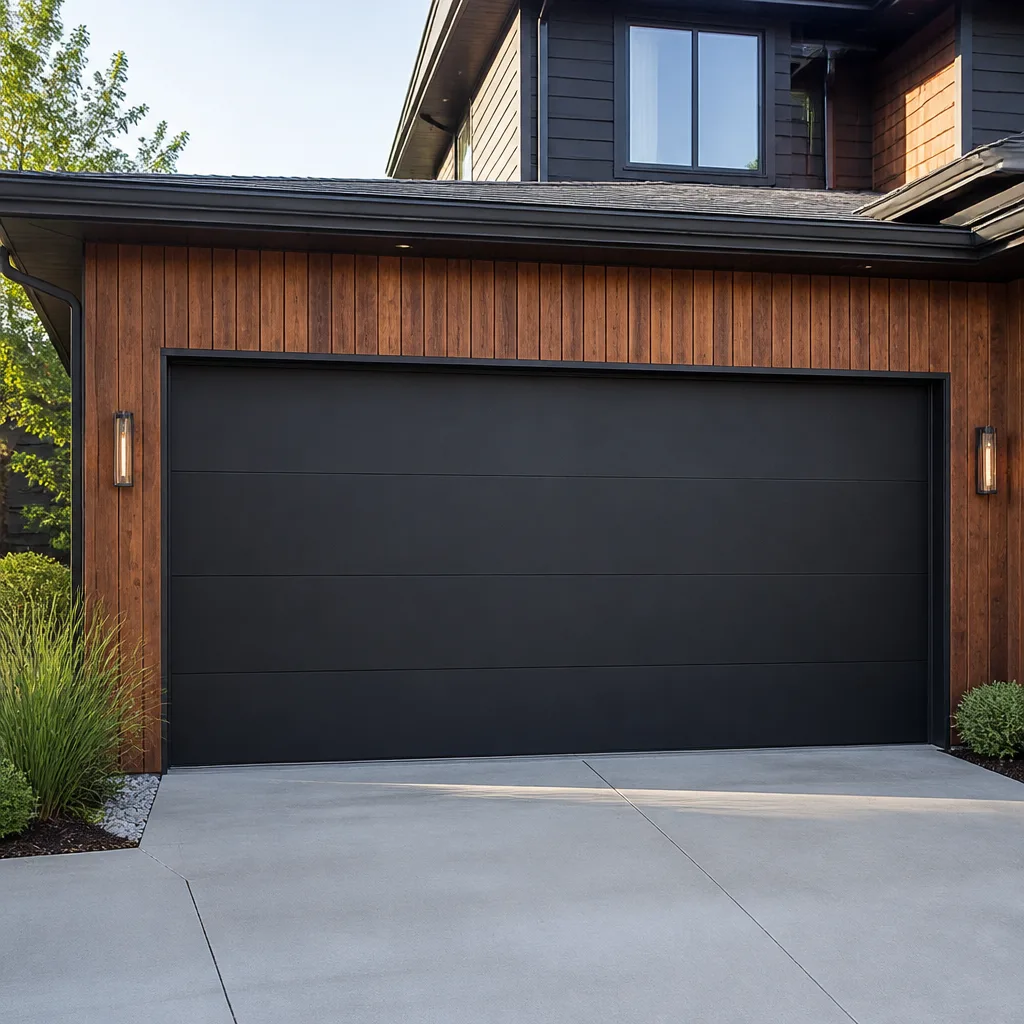 Modern flush
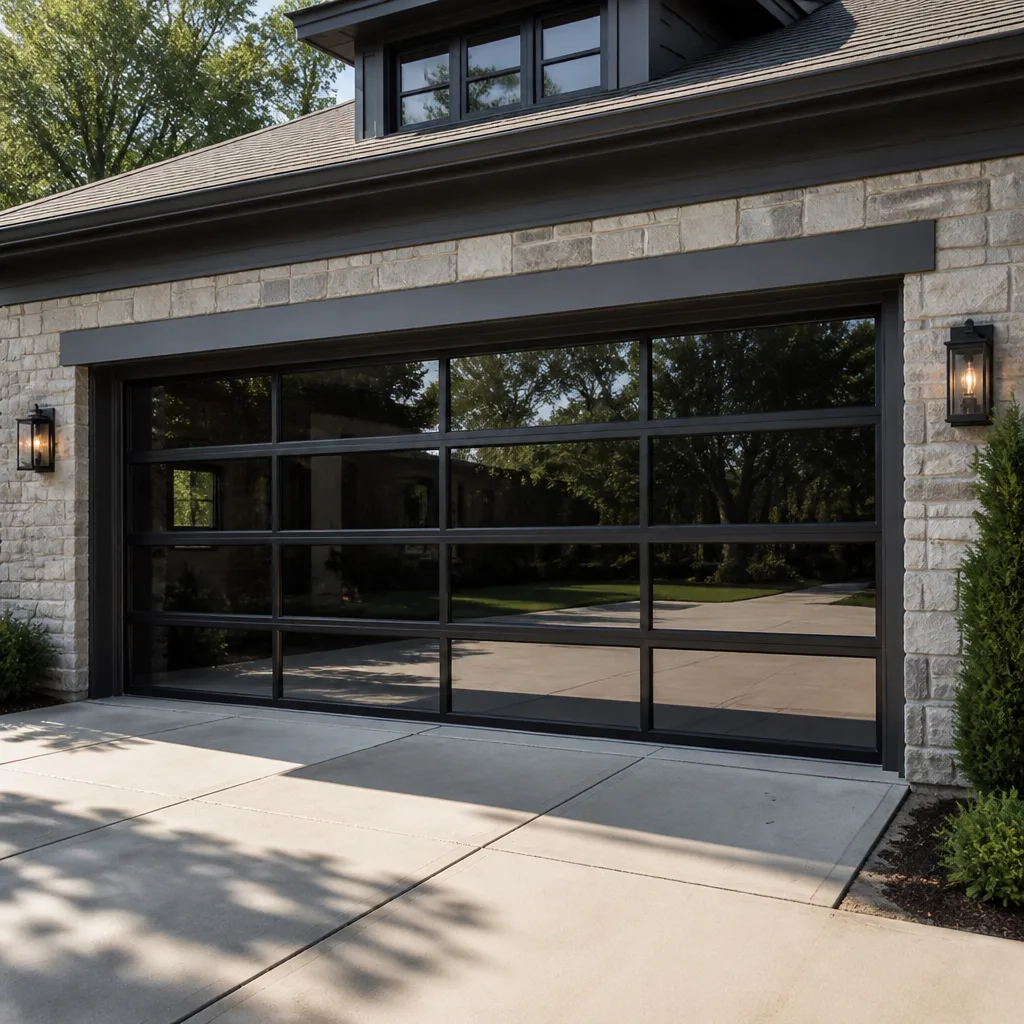 Full-view glass
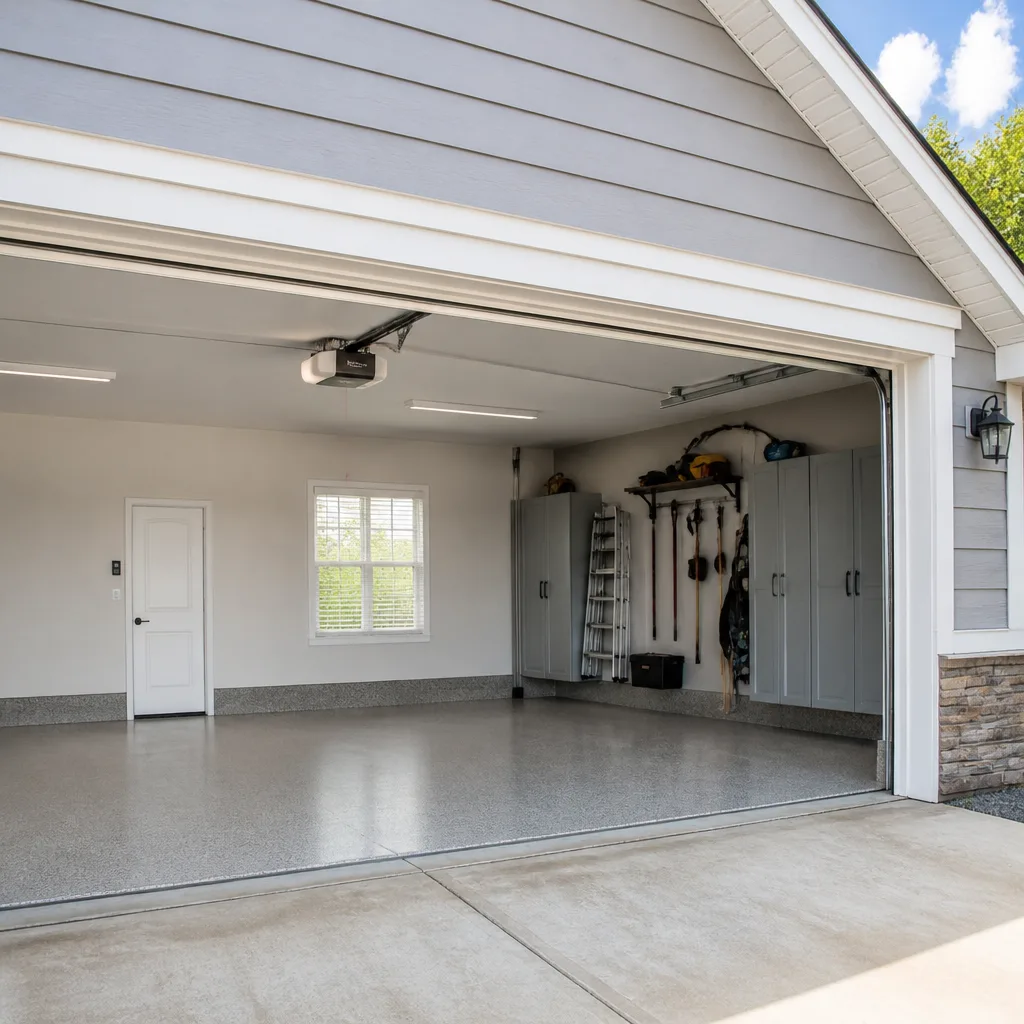 LiftMaster openers
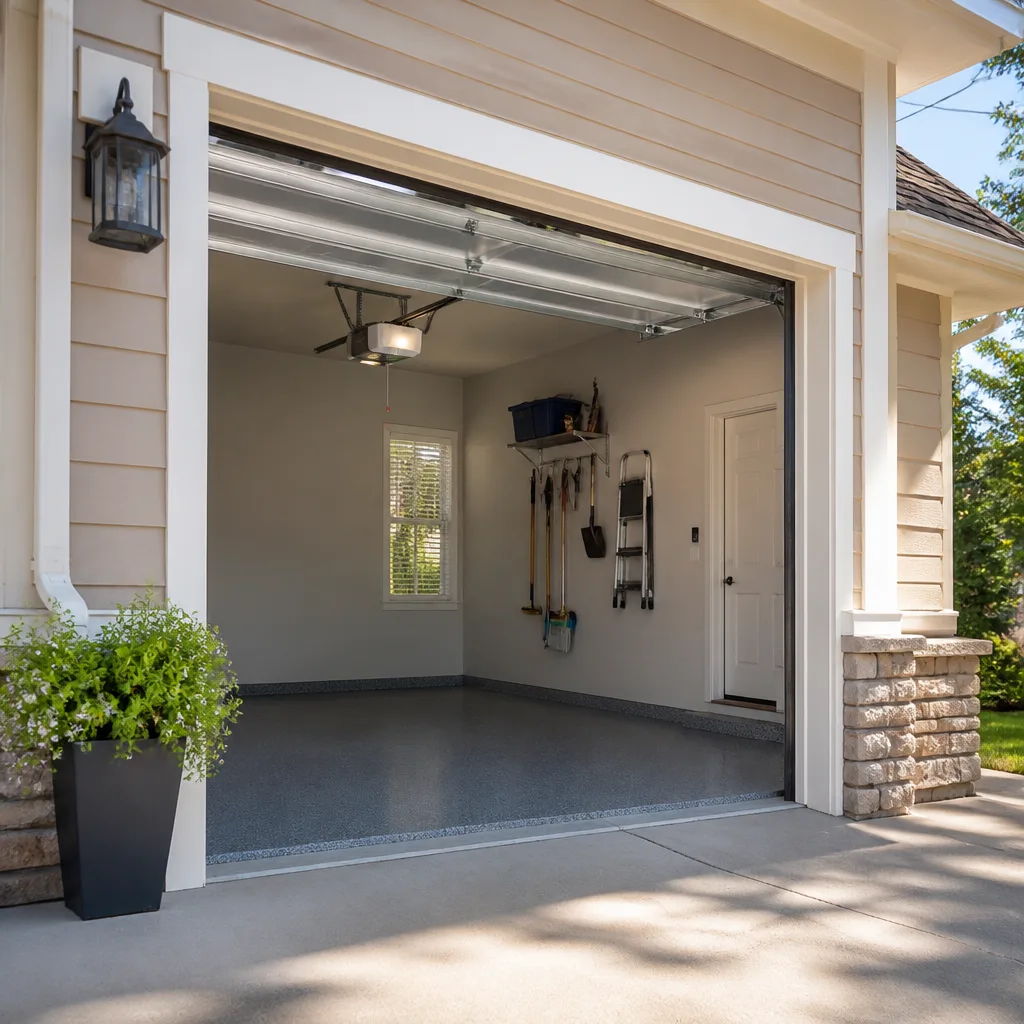 Chamberlain openers
Full 25-point door and opener safety check with every visit - springs, cables, rollers, tracks, and your LiftMaster or Chamberlain opener included
You get a price before we start. It does not change when the pro arrives.
Get your free estimateDIY vs Professional Garage Door: The Ellicott City Homeowner’s Decision Guide
Most homeowners approach this question by asking whether they’re handy enough. That’s the wrong starting point. The answer changes when you look at what a torsion spring actually does: a wound torsion spring holds enough stored energy to break a bone or worse when it releases under load, and that’s physics, not a scare tactic. The real dividing line between a weekend project and a call to a specialist isn’t your ability with a wrench. It’s which tasks carry injury risk or create a liability gap. This guide draws that line clearly for Ellicott City homeowners, covering what you can safely handle, what you shouldn’t touch, and what the permit and insurance angles look like in Howard County.
Quick Answer
Some garage door tasks are genuinely safe for homeowners: weatherstripping, lubrication, photo-eye sensor alignment, and remote or keypad programming. Everything that touches the springs, cables, cable drums, bottom brackets, or full panel replacement belongs to a trained technician. And any installation that requires a Howard County permit needs a licensed contractor to sign off, which closes the DIY door on those jobs entirely. Repair topics like garage door repair are professional work; maintenance is where you stay.
Styles & brands we work with
- Raised-panel steel
- Carriage house
- Modern flush
- Full-view glass
- LiftMaster openers
- Chamberlain openers
Table of Contents
- What Garage Door Tasks Are Actually Safe to DIY?
- The Professional-Only List: Springs, Cables, and Structural Panels
- How DIY Spring Work Affects Your Homeowner’s Insurance
- What DIY Attempts Cost When They Go Wrong
- Howard County Permits and the DIY Compliance Gap
- What “Professional” Actually Means in This Trade
- A Simple Decision Framework for Ellicott City Homeowners
- Why Ellicott City’s Climate Shortens Door Lifespan
What Garage Door Tasks Are Actually Safe to DIY?
The safe list is shorter than most homeowners expect, but it’s real. These tasks don’t involve stored spring tension, high-torque cables, or the structural load of the door itself. If you’re comfortable on a step ladder and can follow manufacturer instructions, they’re reasonable to handle yourself.
- Weatherstripping and bottom seal replacement. These wear out in Ellicott City’s humidity and freeze-thaw cycles. Swapping a bottom seal or the perimeter trim is a hand-tool job with no stored energy involved.
- Lubrication. Applying a proper garage door lubricant to hinges, rollers, and the torsion bar bearings (without disassembling anything) is safe and extends component life. Avoid spraying the tracks themselves, since lubricant attracts grit that wears the rollers faster.
- Photo-eye sensor alignment. If the door reverses immediately after closing, the safety sensors near the floor are usually misaligned or blocked. Nudging them back into line and cleaning the lenses is a homeowner task.
- Remote and keypad programming. Reprogramming a Genie, LiftMaster, or Chamberlain remote, or setting a new keypad code, is a matter of following the manual. No tools under tension.
- Track cleaning and minor debris removal. Wiping the tracks and clearing leaves or grit prevents binding. Straightening bent tracks is not on this list.
You’ll notice something about that list: none of it involves opening a panel, releasing a spring, or loosening a cable. That’s the dividing line. Anything that requires you to put your hands on the tension side of the system is off the table, no matter how mechanically confident you are. When a door won’t move at all, or makes a snap you didn’t plan for, that’s a different category of problem, and we cover the professional side in the sections below.
The Professional-Only List: Springs, Cables, and Structural Panels
This list exists for one reason: injury. Every item here involves either stored energy, sudden release, or the full weight of a door that can drop. A torsion spring at rest under tension, a stretched extension spring, a tensioned cable anchored to a bottom bracket: each of these can fail violently even when you’re being careful. Our position is simple, and it isn’t about doubting your ability. It’s that no repair that can maim you belongs in a weekend project.
- Torsion and extension springs. Replacing, adjusting, or even unweighting them requires specialized winding bars and a controlled release sequence. Winding a torsion spring to the wrong number of turns turns a routine repair into a dangerous one. This is the heart of garage door spring repair, and it’s a job we treat with real care.
- Cables and cable drums. Cables are under the same tension the springs create. A cable that slips off a drum can slice through a hand or arm. Never touch a cable while the door is under tension.
- Bottom brackets. The bracket at the door’s bottom corner is where the cable anchors. It is under constant load and fails without warning.
- Full panel replacement. Restoring a door’s balance and alignment after replacing a section means re-tuning the spring system. A mis-weighted door strains the opener and shortens its life.
- High-lift or track reconfiguration. Changing the door’s travel path affects every tension point in the system at once.
If you take one thing from this guide, take this: a torsion spring stores the potential energy of a small car’s suspension in a bar you can hold in one hand. Treat it that way. The professional-only list isn’t a sales tactic; it’s a safety boundary. For repairs anywhere in Ellicott City, from the old homes near the Patapsco to newer builds off Route 40, this is where the phone call replaces the toolbox.
How DIY Spring Work Affects Your Homeowner’s Insurance
Here’s the less obvious half of the DIY decision: it’s not only about your safety. Spring work you do yourself can complicate an insurance claim if someone is injured afterward. The wording of most homeowner policies around unpermitted or improperly performed structural work is the part worth understanding before you decide to save on a service call.
Insurance claims hinge on causation and whether the work was done to code, by a competent party, with a paper trail. When a garage door fails after homeowner-installed spring work and an injury or property damage follows, the adjuster’s first question is whether the installation was performed properly. There’s no service record, no licensed contractor’s sign-off, and often no way to prove the work met manufacturer specifications. That’s a gap that can’t be closed after the fact.
- A professional repair leaves a documented service record you can hand to an adjuster.
- Licensed, insured work gives the insurer a responsible party to follow up with.
- Homeowner work on components under mechanical tension can be read as negligent self-installation, which is where coverage disputes start.
- If a guest or family member is injured, the liability question widens beyond the door itself.
We can’t tell you what your specific policy says, and we won’t pretend to. What we can say is that the paper trail matters, and it’s easier to have one than to reconstruct it. If you’ve already attempted spring work and want it checked, that’s a reasonable call too. Being cautious after the fact is smarter than being cautious never.
What DIY Attempts Cost When They Go Wrong
The cost-of-failure math is where DIY economics stops looking like savings. When a common DIY attempt fails, the remediation usually costs more than the original professional service, sometimes several times more. The pattern repeats across the trades we handle in Ellicott City.
Take spring repair. A homeowner sources a replacement spring from a big-box store, winds it, and finds the door still unbalanced or the opener struggling. The door now needs the original repair plus a full re-balance and possibly a new opener that’s been overworked. Or the failure is more sudden: a cable slips, the door drops, and a panel and track take the impact. What started as a spring job becomes a spring job, cable repair, panel replacement, and track realignment. The original service call becomes a fraction of the final bill.
- Over-wound spring. The door won’t stay closed or jerks open, straining the opener until the gears strip. Now it’s spring repair plus opener work.
- Track bent during panel work. A misaligned panel buckles the track and binds the rollers, so the repair grows into track and hardware replacement.
- Opener driven against a frozen or unbalanced door. The motor burns out, and you’re replacing an opener that was fine before.
- Safety sensors defeated to “make it close.” The door stops sensing obstruction, which is exactly the situation the sensors exist to prevent.
There’s a brand-specific angle here too. Modern openers from Clopay-compatible operators, Genie, and others have logic boards and travel-limit settings that assume the door is correctly balanced. Drive them against an unbalanced door and the electronics take the hit. A trained technician diagnoses that kind of failure by brand behavior instead of guesswork, which is why we stay fluent in the systems people already own.
None of this is meant to make you feel bad about wanting to save money. It’s meant to show that the honest version of DIY is the safe list from earlier, not the tension side. Remediation costs aren’t predictable, but they’re directionally higher than the service you were avoiding.
Howard County Permits and the DIY Compliance Gap
Full garage door replacement in Howard County generally requires a permit, and that’s where DIY installation runs into a compliance gap that has nothing to do with whether you did the work correctly. If the job requires a permit and no licensed contractor signs off, you can end up with a completed project that doesn’t pass inspection and can’t easily be made to.
We won’t invent a code section or quote you a specific rule we haven’t verified with the county. The right move is to call the Howard County building department and ask what a garage door replacement at your address requires. What we can tell you is the general shape of the problem:
- A permit is often required for a full door replacement. Whether it is for your specific job depends on scope, so confirm with the county.
- Inspections require a licensed contractor’s involvement. A homeowner-installed door without that involvement can leave the project in a state that’s difficult to close out.
- The gap surfaces at sale or refinancing. Unpermitted structural work is a question on disclosure forms and a flag in title work.
- The fix is often more expensive than doing it right. Retrofitting a documented, permitted installation after the fact costs more than arranging it at the start.
For an Ellicott City homeowner, a new door is a real investment in the property, and the permit piece protects that investment. It’s one of the reasons a full Ellicott City garage door repair pros relationship is worth having: a repair today and an installation later can be handled by one team that understands the paperwork side, not just the hardware. When you’re ready for the install, ask the county first, then get a measured quote.
What “Professional” Actually Means in This Trade
The complaint we hear most often about pro pricing is that “it’s just a spring, it took you 90 minutes.” That’s a fair observation and the wrong conclusion. What looks like a short job is the visible end of a long skill: years of repetition, thousands of spring changes, and the pattern recognition to know what’s about to fail as soon as the door is a few inches off the ground.
Our technicians have up to 11 years of experience, and that’s what you’re buying when you hire a specialist. What that looks like on a real job:
- Correct diagnosis the first time. A pro identifies whether the noise is a roller, a bearing, or the beginning of a spring failure by how the door behaves, brand-specific tendencies included.
- Balancing done to spec. A door properly balanced uses its opener as a guide rail, not a motor lifting the full weight. Get this wrong and the opener dies early.
- Safe handling of the tension side. The right tools and the right release sequence, done without injury risk to anyone in the building.
- Knowledge of the equipment. Whether you have a Wayne Dalton door or an Amarr panel, the failure modes differ, and so does the fix.
- Documented, insured work. A paper trail you can show your insurer and your buyer.
Is a spring replacement a simple task for someone who’s done it thousands of times? In the same way a clean weld is simple for a welder. The skill is real, and it was earned over years. A specialist focuses solely on garage doors, not an ever-changing menu of handyman work, so that efficiency is concentrated rather than spread thin. That’s what “professional” means in this trade, and it’s why we think it’s worth the service call on the jobs that matter.
A Simple Decision Framework for Ellicott City Homeowners
If you want a clear rule rather than a judgment call, use this framework. It bypasses the skill question entirely and asks about consequences instead.
- Does the task touch a spring, cable, bottom bracket, or require removing a hinge from a loaded system? If yes, call a professional. Not a close call.
- Does the job involve full panel or door replacement? Call a professional, and confirm the Howard County permit requirement first.
- Is the door failing to open, stuck, or making a snapping sound? Call a professional. Those symptoms are about tension and load, not adjustment.
- Is the task weatherstripping, lubrication, sensor alignment, or remote programming? Safe for DIY. If it doesn’t fix the problem, the cause is deeper, so move to a pro.
- Would a failure here leave anyone injured or your insurance exposed? If yes, that alone settles it. Route the job to a trained technician.
That framework tends to resolve the ambiguity in about thirty seconds. For anything past the safe list, our garage door opener repair team can diagnose the cause and quote before any work starts. The framework exists so you don’t have to decide under stress when the door fails at 7am and the car’s inside.
Why Ellicott City’s Climate Shortens Door Lifespan
The Ellicott City climate is hard on garage door hardware, and understanding why helps you pick your battles. The area’s humidity and freeze-thaw cycles work on metal and seals all year, and the surrounding tree cover adds its own wear. The good news is that the climate’s effects are mostly maintenance items, which means they belong on the safe DIY list.
The Patapsco River valley and the older neighborhoods around Main Street tend to hold humidity, which accelerates corrosion on hinges, rollers, and the torsion bar. The colder stretches of winter bring freeze-thaw cycles that stiffen seals and shrink weatherstripping, letting in the drafts and moisture that cause the next round of problems. Throughout spring and summer, pollen and the leaf fall from the wooded lots common in Ellicott City collect in tracks and rollers, wearing them down if not cleaned.
What that means for your DIY calendar: lubricate hinges and bearings more often in the humid months, replace bottom seals when they stiffen or crack, and keep tracks clear of debris from the trees. What it does not mean is that a spring failure is a weather event you can fix at home. If your door starts struggling in cold weather, that’s typically a sign the spring is near the end of its tension-bearing life, and that’s a specialist call, not a lubrication project. Recognizing the difference is the whole skill.
Common Mistakes to Avoid
- Winding a torsion spring without a winding bar and a proper release sequence. A homeowner holding a wrench instead of a bar is one of the most common ways spring jobs end in a hospital visit. The dangerous part isn’t the spring itself; it’s the release.
- Using WD-40 on tracks and calling it lubrication. WD-40 and similar light sprays attract grit, which wears rollers and can make the door louder over time. Use a proper garage door lubricant on hinges and bearings, and keep the tracks dry.
- Adjusting the opener’s force settings to compensate for a binding door. Crank up the force settings and the motor can pull through a binding track, but the strain eventually strips the gears. Fix the binding, don’t mask it.
- Overriding the safety sensors to make the door close. Zip-tying or taping a sensor out of position is a common quick fix around Ellicott City that removes the door’s only blind-spot protection. Realign the sensors instead.
- Installing a new door without checking the Howard County permit requirement. A DIY replacement that needs a permit can leave the project unclosable at sale or refinance. Confirm with the building department before buying the door.
- Replacing a single panel and skipping the re-balance. The new panel changes the door’s weight and the spring system’s calibration. An unbalanced door overworks the opener and shortens its life.
- Assuming a worn spring is a weather problem that will pass. In Ellicott City’s freeze-thaw climate, a struggling door in cold weather usually signals a spring near failure. That’s a call, not a wait.
See the difference
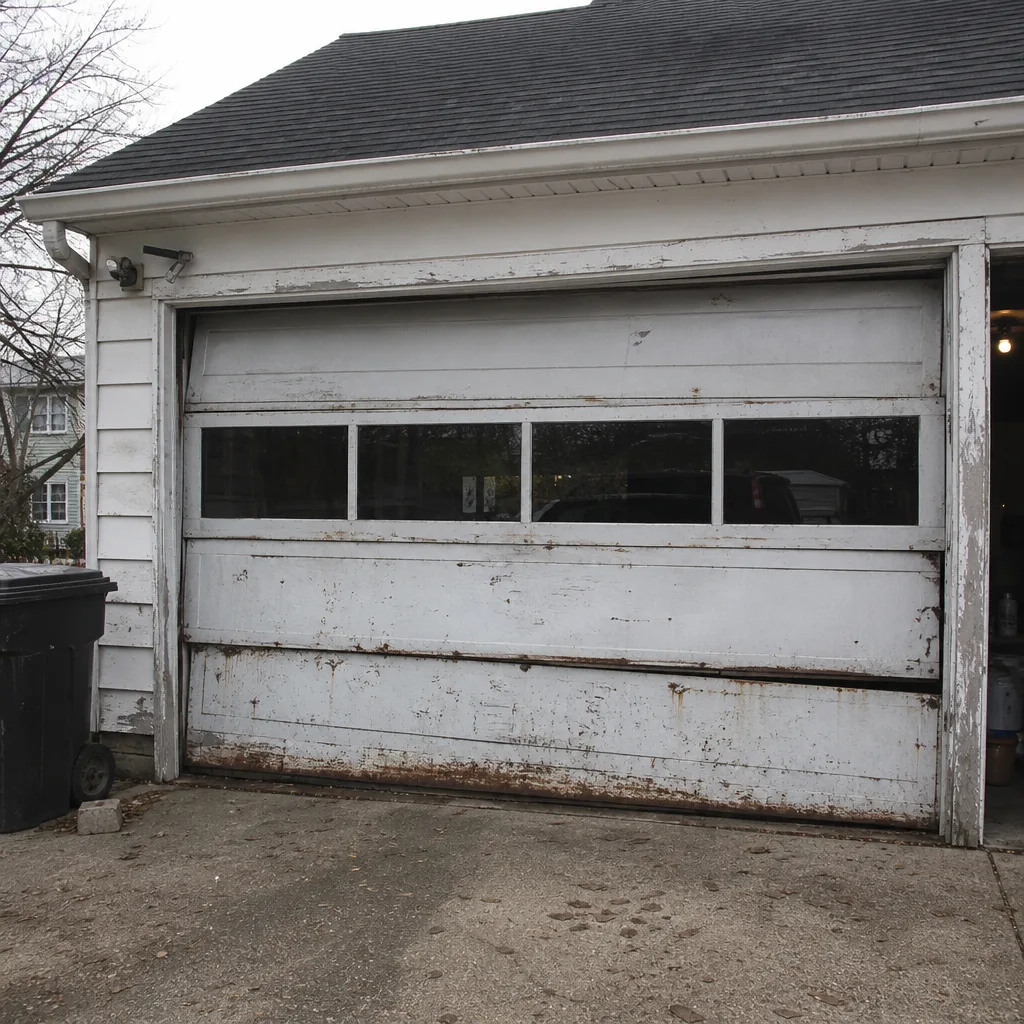 Before
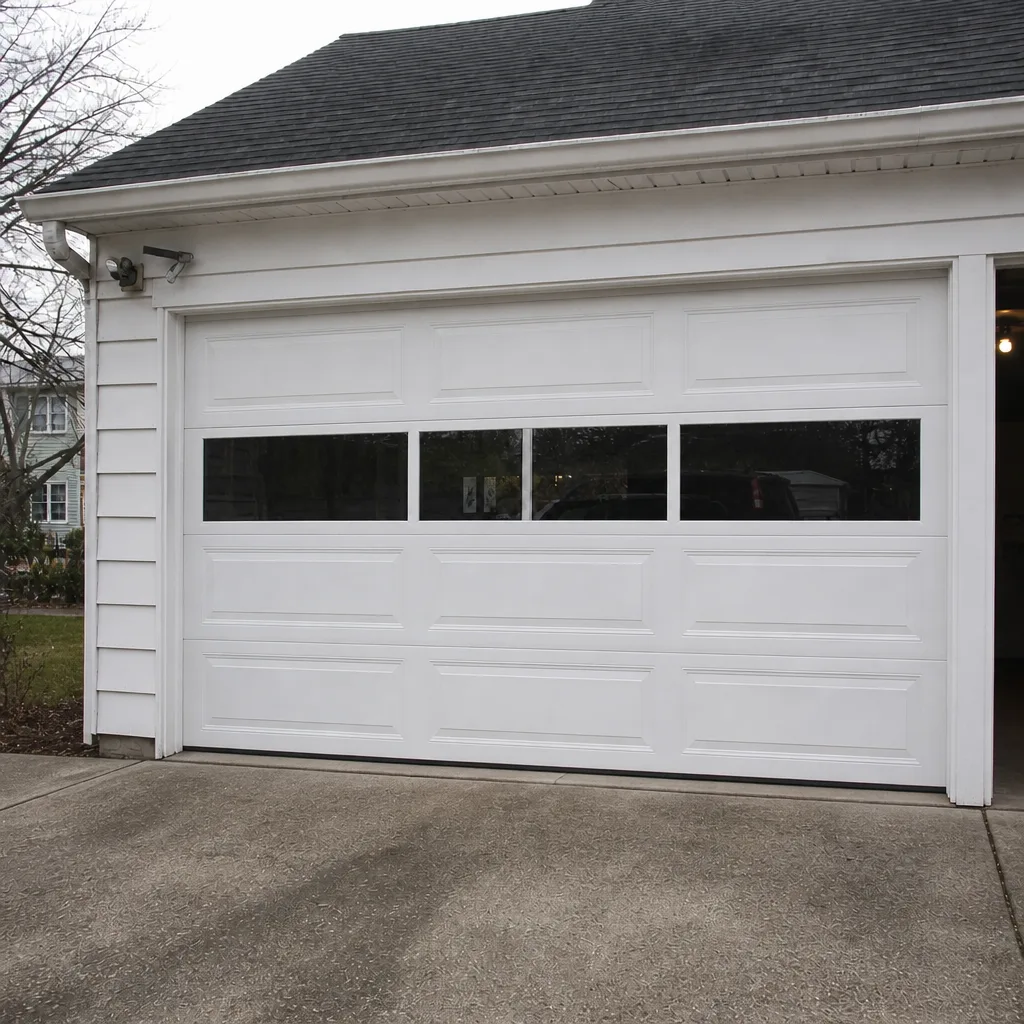 After
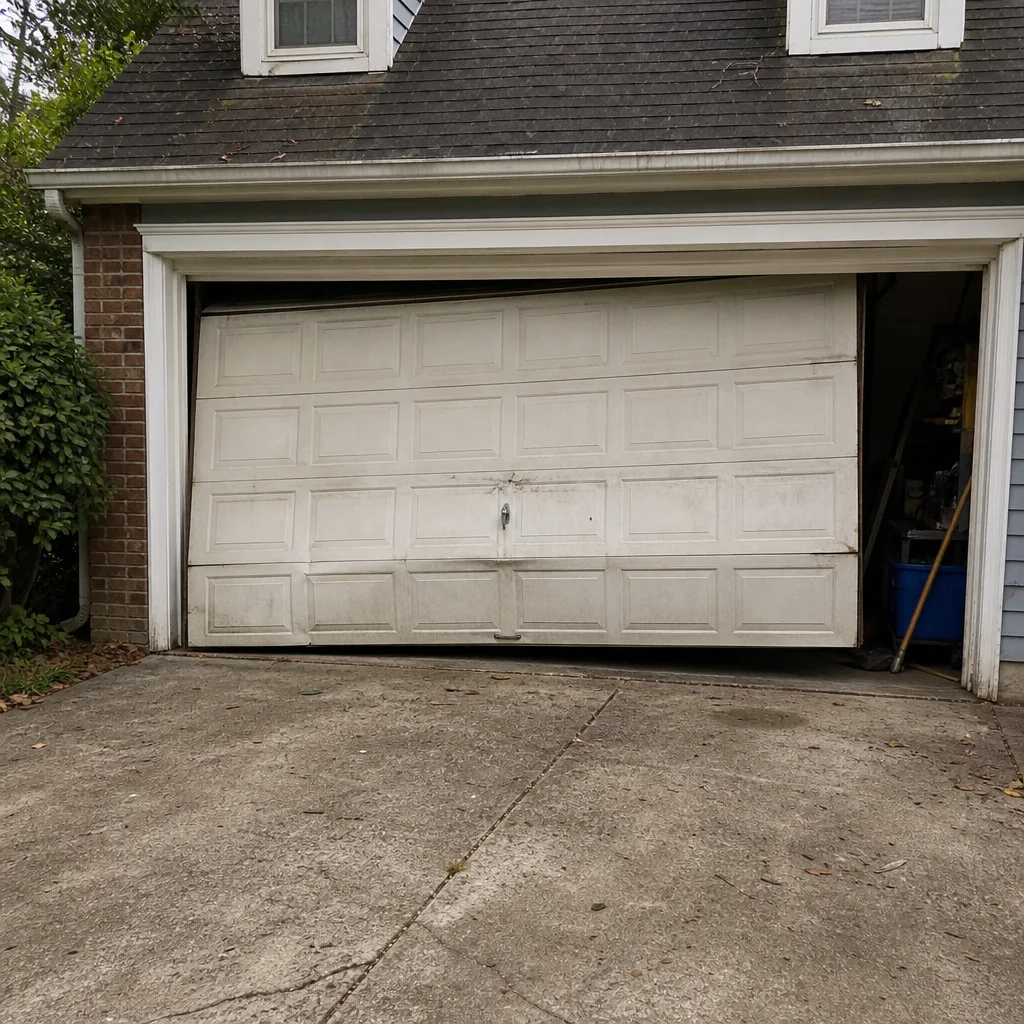 Before
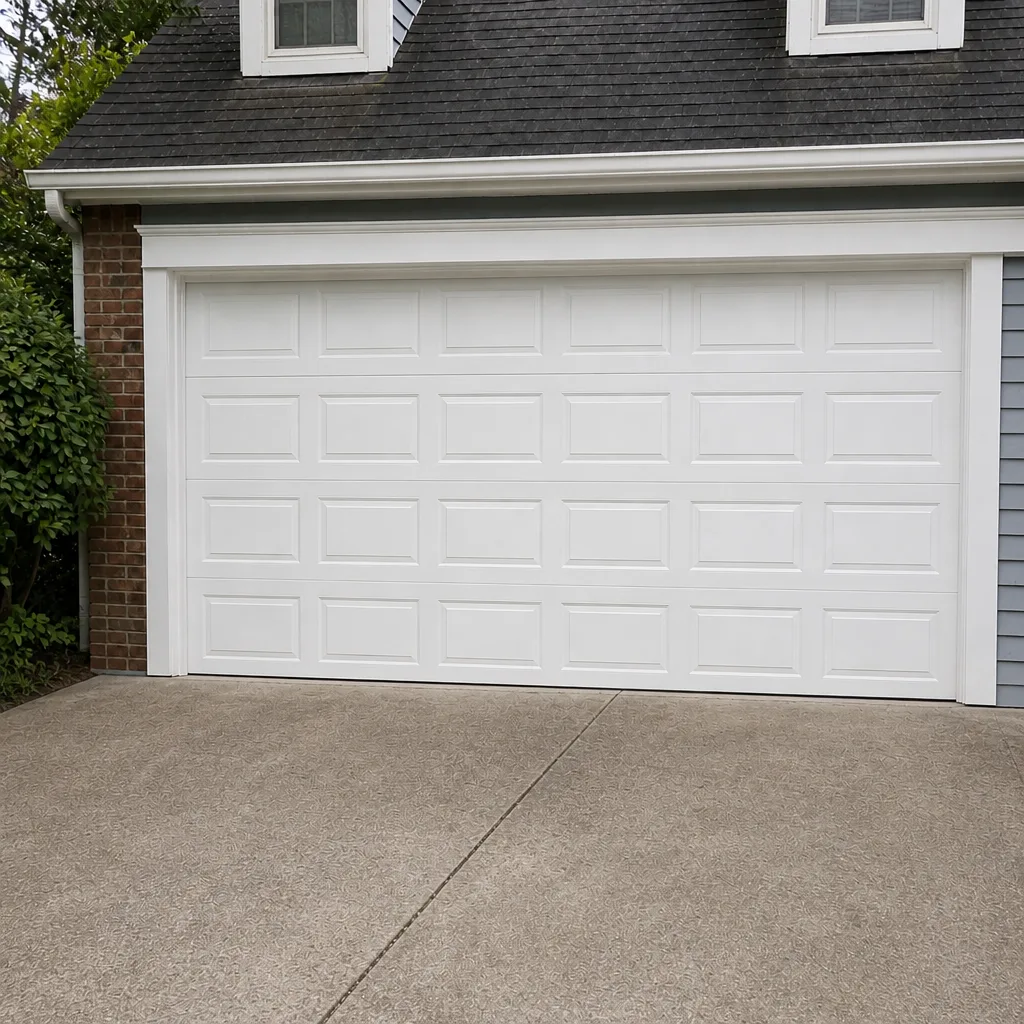 After
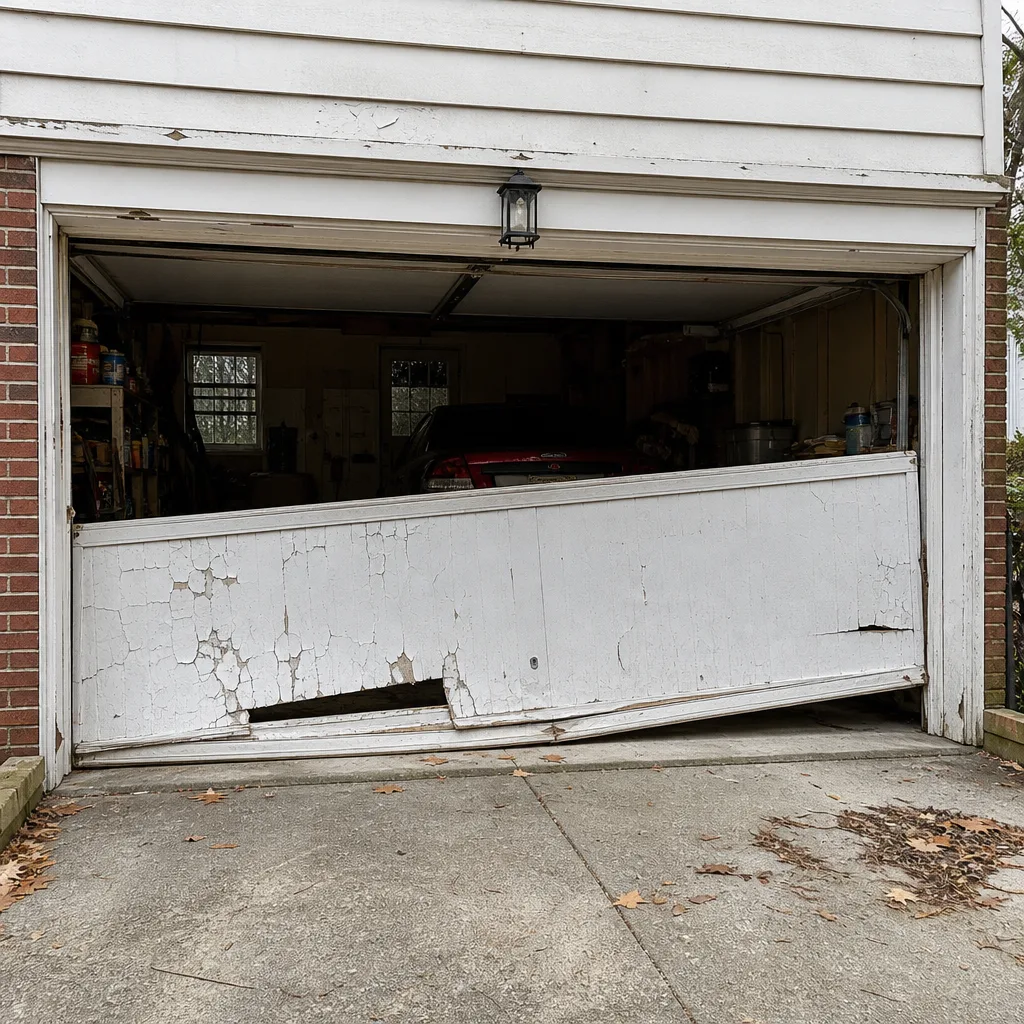 Before
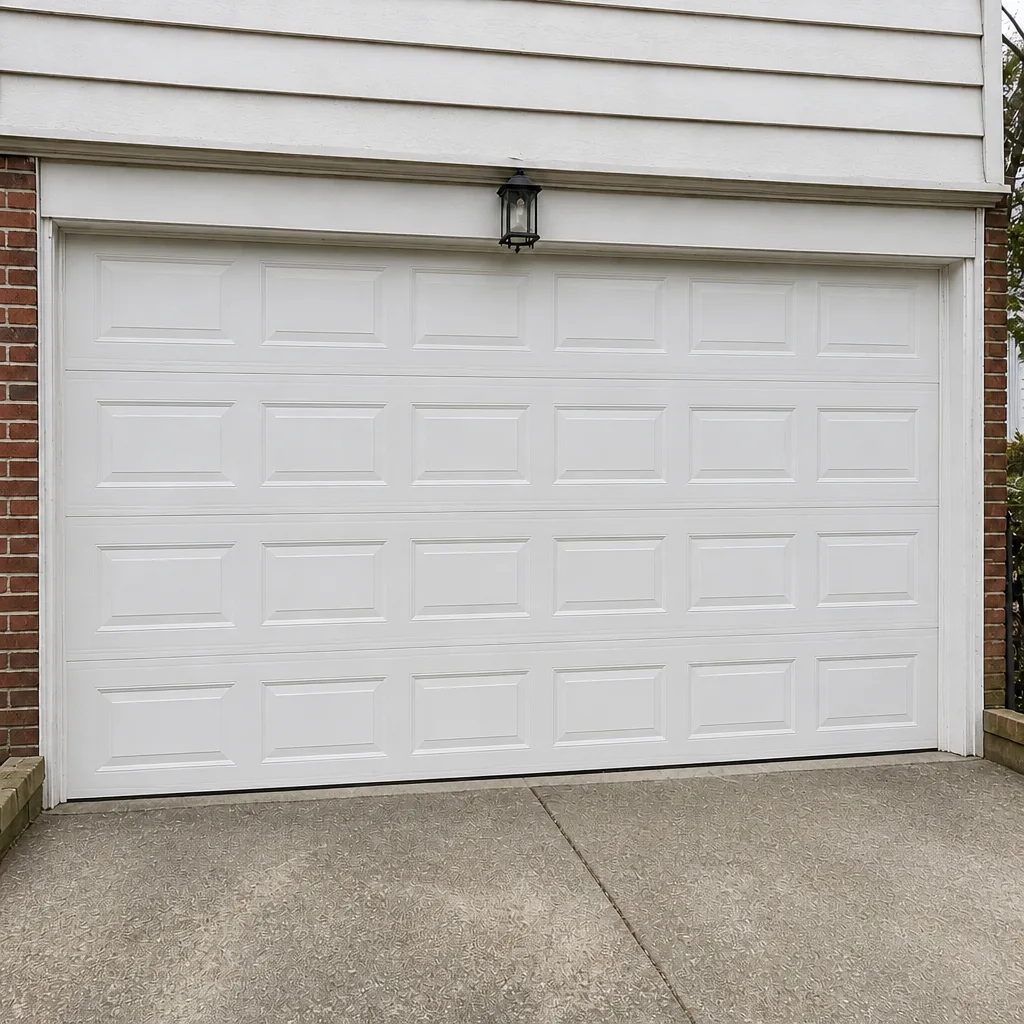 After
When to Call a Professional
Call a professional the moment the problem touches the tension side of the system, when the door won’t move at all, when you hear or see a snapped spring, when a cable looks slack or loose, or when you’re planning a full door or panel replacement. Those are the cases where the risk of injury, the cost of remediation, and the Howard County permit question all point the same direction. Ellicott City Garage Door Repair Pros offers free estimates in Ellicott City, with pricing quoted and agreed before any work starts, and our technicians have up to 11 years of experience on the brands you already have. The local pro is licensed and insured as the state requires and can work with your insurer if an injury or damage claim comes up. Call (855) 840-2105 for a free estimate.
Frequently Asked Questions
No, and it isn’t a matter of skill level. A torsion spring stores enough energy to cause serious injury if it releases improperly, and DIY spring work also leaves you with no service record or licensed sign-off if someone is later injured. Call a professional for spring work regardless of how handy you are. Call (855) 840-2105 for a free estimate.
Weatherstripping and bottom seal replacement, lubrication, photo-eye sensor alignment, and remote or keypad programming are the safe DIY tasks. Everything involving springs, cables, cable drums, bottom brackets, or full panel replacement belongs to a trained technician. If a DIY task doesn’t fix the problem, the cause is deeper and needs a specialist.
Full garage door replacement in Howard County often requires a permit, so call the county building department to confirm what applies at your address. If a permit is needed and no licensed contractor signs off, the project can end up with a compliance gap that surfaces at resale or refinancing. Confirming before you buy the door avoids the problem entirely. Call (855) 840-2105 to talk through the scope and get a written price.
It depends on your policy, and no one can promise an outcome in advance. What we can say is that a documented professional repair gives your insurer a service record and a responsible party to work with, while homeowner spring work can be harder to support after a failure. Ask your insurer directly about how self-performed work is treated. If you want the door checked before a problem spreads, call (855) 840-2105 for a free estimate.
Typical costs depend on the job and the brand, and the written estimate is the number that counts. We quote and agree the price before any work starts, so you won’t see a bigger invoice than the one you approved. We’re fluent across the systems people in Ellicott City actually own, including Genie, Clopay, Amarr, and Wayne Dalton, so the diagnosis is specific to your equipment. Call (855) 840-2105 for a free estimate.
You’re paying for correct diagnosis, safe handling of stored energy, and balancing done to spec, which took our technicians up to 11 years of experience to master. A pro who’s changed thousands of springs works efficiently because of repetition, not because the job is trivial. The cost of a failed DIY attempt usually exceeds the original service charge. Call (855) 840-2105 for a free estimate and a written price before work begins.
The Bottom Line
The DIY-versus-professional decision for a garage door comes down to one question: does the task carry injury risk or a liability consequence? If yes, it’s professional work, no matter how capable you are. Weatherstripping, lubrication, sensor alignment, and remote programming stay on your side of the line. Springs, cables, cable drums, bottom brackets, and full panel or door replacement belong to a trained technician. Factor in the Howard County permit angle for installation and the insurance paper trail after a failure, and the safe list stays your domain while the tension side stays with a pro. One team, from today’s repair to next year’s installation.
Call Ellicott City Garage Door Repair Pros at (855) 840-2105 for a free estimate. Pricing is quoted and agreed before any work starts, and we work on the brand you already have.
Written by the team at Ellicott City Garage Door Repair Pros.